Imagine that one day the whole world would look like this.
fucking nature can’t learn to stop
Reblogging this to give you all a link to Life After People, a really good docu-series about what would happen to the planet if everyone died, complete with accurate scientific breakdowns.
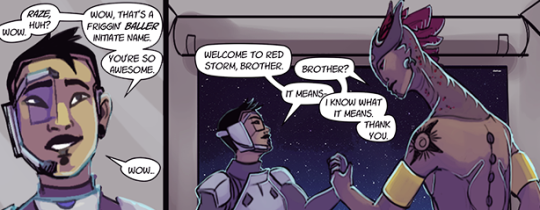
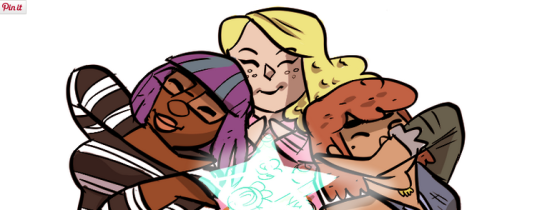
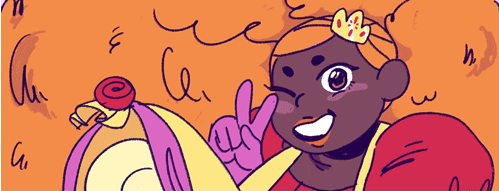
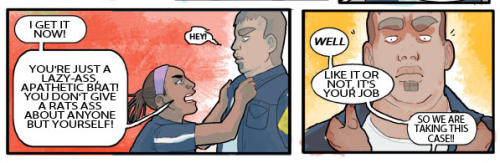
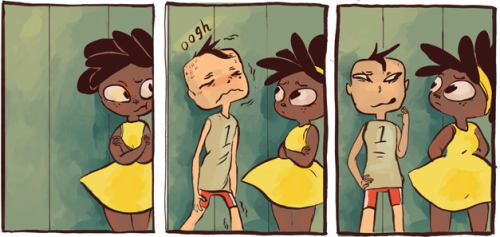
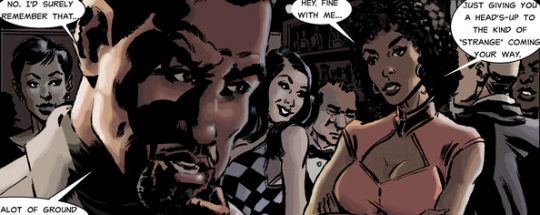
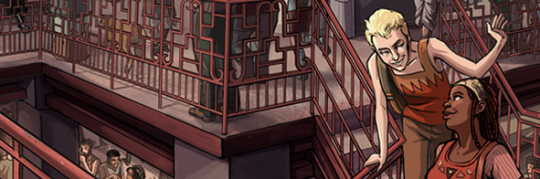
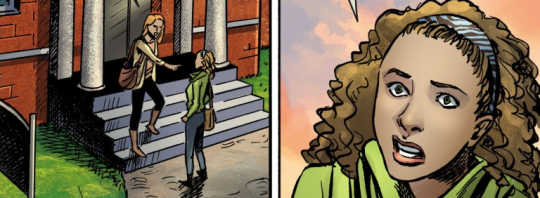
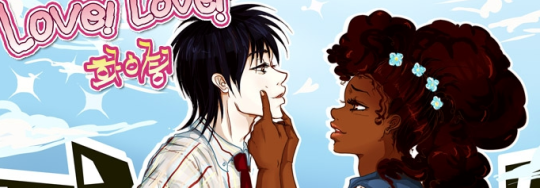
I was wondering how many webcomics there were out there with black protagonists (for my own reference). Then I figured plenty of other folks would love to see a list. So heeeeere we go! (Please reblog and add more!)
3. Make it exactly the same as the anon hate except use a homestuck troll typing quirk. It doesn’t matter which one.
4. Respond to the fake anon hate by roasting them for impersonating a homestuck troll.
5. The real anon now has a choice. The can come off anon and prove that you changed their message, or they can wallow in silence, knowing that they have failed to bother you.
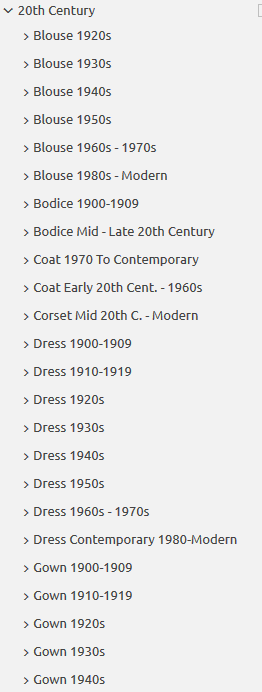
Do you design a lot of characters living in not-modern eras and you’re tired of combing through google for the perfect outfit references? Well I got good news for you kiddo, this website has you covered! Originally @modmad made a post about it, but her link stopped working and I managed to fix it, so here’s a new post. Basically, this is a costume rental website for plays and stage shows and what not, they have outfits for several different decades from medieval to the 1980s. LOOK AT THIS SELECTION:
OPEN ANY CATEGORY AND OH LORDY–
There’s a lot of really specific stuff in here, I design a lot of 1930s characters for my ask blog and with more chapters on the way for the game it belongs to I’m gonna be designing more, and this website is going to be an invaluable reference. I hope this can be useful to my other fellow artists as well! 🙂
As someone who originally trained as a social historian of the Medieval Period, I have some things to add in support of the main point. Most people dramatically underestimate the economic importance of Medieval women and their level of agency. Part of the problem here is when modern people think of medieval people they are imagining the upper end of the nobility and not the rest of society.
Your average low end farming family could not survive without women’s labour. Yes, there was gender separation of labour. Yes, the men did the bulk of the grain farming, outside of peak times like planting and harvest, but unless you were very well off, you generally didn’t live on that. The women had primary responsibility for the chickens, ducks, or geese the family owned, and thus the eggs, feathers, and meat. (Egg money is nothing to sneeze at and was often the main source of protein unless you were very well off). They grew vegetables, and if she was lucky she might sell the excess. Her hands were always busy, and not just with the tasks you expect like cooking, mending, child care, etc.. As she walked, as she rested, as she went about her day, if her hands would have otherwise been free, she was spinning thread with a hand distaff. (You can see them tucked in the belts of peasant women in art of the era). Unless her husband was a weaver, most of that thread was for sale to the folks making clothe as men didn’t spin. Depending where she lived and the ages of her children, she might have primary responsibility for the families sheep and thus takes part in sheering and carding. (Sheep were important and there are plenty of court cases of women stealing loose wool or even shearing other people’s sheep.) She might gather firewood, nuts, fruit, or rushes, again depending on geography. She might own and harvest fruit trees and thus make things out of that fruit. She might keep bees and sell honey. She might make and sell cheese if they had cows, sheep, or goats. Just as her husband might have part time work as a carpenter or other skilled craft when the fields didn’t need him, she might do piece work for a craftsman or be a brewer of ale, cider, or perry (depending on geography). Ale doesn’t keep so women in a village took it in turn to brew batches, the water not being potable on it’s own, so everyone needed some form of alcohol they could water down to drink. The women’s labour and the money she bought in kept the family alive between the pay outs for the men as well as being utterly essential on a day to day survival level.
Something similar goes on in towns and cities. The husband might be a craftsman or merchant, but trust me, so is his wife and she has the right to carry on the trade after his death.
Also, unless there was a lot of money, goods, lands, and/or titles involved, people generally got a say in who they married. No really. Keep in mind that the average age of first marriage for a yeoman was late teens or early twenties (depending when and where), but the average age of first marriage for the working poor was more like 27-29. The average age of death for men in both those categories was 35. with women, if you survived your first few child births you might live to see grandchildren.
Do the math there. Odds are if your father was a small farmer, he’s been dead for some time before you gather enough goods to be marrying a man. For sure your mother (and grandmother and/or step father if you have them) likely has opinions, but you can have a valid marriage by having sex after saying yes to a proposal or exchanging vows in the present (I thee wed), unless you live in Italy, where you likely need a notary. You do not need clergy as church weddings don’t exist until the Reformation. For sure, it’s better if you publish banns three Sundays running in case someone remembers you are too closely related, but it’s not a legal requirement. Who exactly can stop you if you are both determined?
So the less money, goods, lands, and power your family has, the more likely you are to be choosing your partner. There is an exception in that unfree folk can be required to remarry, but they are give time and plenty of warning before a partner would be picked for them. It happened a lot less than you’d think. If you were born free and had enough money to hire help as needed whether for farm or shop or other business, there was no requirement of remarriage at all. You could pick a partner or choose to stay single. Do the math again on death rates. It’s pretty common to marry more than once. Maybe the first wife died in childbirth. The widower needs the work and income a wife brings in and that’s double if the baby survives. Maybe the second wife has wide hips, but he dies from a work related injury when she’s still young. She could sure use a man’s labour around the farm or shop. Let’s say he dies in a fight or drowns in a ditch. She’s been doing well. Her children are old enough to help with the farm or shop, she picks a pretty youth for his looks instead of his economic value. You get marriages for love and lust as well as economics just like you get now and May/December cuts both ways.
A lot of our ideas about how people lived in the past tends to get viewed through a Victorian or early Hollywood lens, but that tends to be particularly extreme as far was writing out women’s agency and contribution as well as white washing populations in our histories, films, and therefore our minds eyes.
Real life is more complicated than that.
BTW, there are plenty of women at the top end of the scale who showed plenty of agency and who wielded political and economic power. I’ve seen people argue that the were exceptions, but I think they were part of a whole society that had a tradition of strong women living on just as they always had sermons and homilies admonishing them to be otherwise to the contrary. There’s also a whole other thing going on with the Pope trying to centralized power from the thirteenth century on being vigorously resisted by powerful abbesses and other holy women. Yes, they eventually mostly lost, but it took so many centuries because there were such strong traditions of those women having political power.
Boss post! To add to that, many historians have theorised that modern gender roles evolved alongside industrialisation, when there was suddenly a conceptual division between work/public spaces, and home/private spaces. The factory became the place of work, where previously work happened at home. Gender became entangled in this division, with women becoming associated with the home, and men with public spaces. It might be assumable, therefore, that women had (have?) greater freedoms in agrarian societies; or, at least, had (have?) different demands placed on them with regard to their gender.
(Please note that the above historical reading is profoundly Eurocentric, and not universally applicable. At the same time, when I say that the factory became the place of work, I mean it in conceptual sense, not a literal sense. Not everyone worked in the factory, but there is a lot of literature about how the institution of the factory, as a symbol of industrialisation, reshaped the way people thought about labour.)
I am broadly of that opinion. You can see upper class women being encouraged to be less useful as the piecework system grows and spreads. You can see that spread to the middle class around when the early factory system gears up. By mid-19th century that domestic sphere vs, public sphere is full swing for everyone who can afford it and those who can’t are explicitly looked down on and treated as lesser. You can see the class system slowly calcify from the 17th century on.
Grain of salt that I get less accurate between 1605-French Revolution or thereabouts. I’ve periodically studied early modern stuff, but it’s more piecemeal.
I too was confining my remarks to Medieval Europe because 1. That was my specialty. 2. A lot of English language fantasy literature is based on Medieval Europe, often badly and more based on misapprehension than what real lives were like.
I am very grateful that progress is occurring and more traditions are influencing people’s writing. I hate that so much of the fantasy writing of my childhood was so narrow.
Great points here, but it’s also worth noting that if you are writing in a historical setting, you don’t have to include the bigotry of the time. Does every historical storyteller depict issues like the poor sanitation, horrific medicine, and short lifespans of their period? No, and their audience doesn’t expect them to. That’s because those things aren’t fun. It’s the same for bigotry.
Gather ‘round kids: I had a coworker mention to me this morning that it’s impossible to get grease stains out of fabric. As a former chemistry minor who worked two years under the table doing housekeeping and who generally tends to be a fucking disaster, I am here to tell everyone that it absolutely is not impossible, in case this is a widespread belief. Here are a few of my favorite cleaning stain removers that I always have at home.
Here are some options:
A Tide™ pen.
I’m a generic kinda lady. I hate promoting brands 99% of the time. BUT if you catch absolutely any kind of stain before it gets ground in, you can get most of it out with one of these babies. I’ve tested it on blood, chocolate, coffee, guacamole, pizza sauce, red wine on, on that one time i accidentally slopped some oil I was supposed to be using on antiques onto a fancy rug (also an antique but not the one I was gunning for). If you’re washing something delicate, pump it onto your finger a couple of times and gently rub it in. I’m not sure what they put in these things but I’m pretty sure it’s an arcane secret.
Dish soap
Granted, this is a little trickier for upholstery/carpet, but it can still be done using a rag, some water, and some patience. But for clothing, just pour some soap on the stain and rub it in under cold running water.
Absolutely any clear alcohol is your new best friend
You know the old “white wine to clean red” trick? Well, this is its updated sister I like to call “you, too, can use coconut rum to get red jello shot out of your nice white dress”. It’s a nice party trick. Straight vodka works even better. For every day situations involving any kind of alcohol-related spills (including markers)–and especially work situations–rubbing alcohol is ideal. To quote another adage, this one from every chemistry teacher you will ever meet, “like dissolves like.”
Hydrogen Peroxide
It can get blood out of absolutely anything, including your mattress. It reacts with the iron in hemoglobin, which breaks down the molecule, causing it to lose its red color. So make sure you’re not using a cast iron skillet to wash your period underwear in.
Vinegar
This will dissolve lime buildup overnight. Fill a bag, tie it around your showerhead, and presto. You can also use it to scrub the area around your sink and to break up any buildup in pipes. (Limeaway™ is for rich people.)
Baking soda
This is great if you have a pet or child who peed on the carpet. Just cover the area, wait until it dries, and vacuum it up. The longer you leave it, the better it will do at removing the smell. It’s also good removing mild odors from a small space, like a fridge or a laundry hamper.
Charcoal
This is your heavy duty odor killer. A little goes a long way. In chemistry, activated charcoal is used as a purifier in reactions, and in medicine, it can be used to treat mild poisoning/overdoses. In your car that smells like someone died because you forgot you had potatoes in the trunk for six months? All you need are regular old charcoal briquettes. Stick a couple handfuls in a flat box and the smell will be gone overnight. Guaranteed. For larger areas, just use more charcoal.
Baking soda is also good for stuff stuck on pots pans and your stove top. Add a little bit of water and elbow grease and it’s like magic
Baby shampoo will get oil stains out of clothing even if it’s been washed and dried several times. Shampoo is formulated to remove oil from organic stuff.
I’m generally of the opinion that trying to directly emulate Sburb at the tabletop would be missing the point of the source material. The whole idea is that Sburb is an unplayable mess by design and can only be defeated by discovering ways to turn the rules against themselves; you can’t use game rules to directly reflect a situation where the rules themselves are an enemy to be defeated.
There are a couple of different ways to get around that. My first impulse would be to go full meta, and for that I’d recommend Wisher, Theurgist, Fatalist – and for once I’m not recommending it as an inside joke! WTF captures both exploration of and antagonism with the rules by erasing the distinction been in-character discovery and out-of-character invention.
Fatalists have mastery over what things are, so a successful Knowledge check allows a fatalist’s payer to simply declare facts about the setting and have them be true, inventing those facts even as her character discovers them. Similarly, theurgists have mastery over how things work, so a successful Insight check allows a theurgist’s player to institute new game on the spot. Wishers govern both the telos of the game’s metaphysics and the social contract of the table, and so forth.
It’s basically an unholy fusion of a tabletop RPG and a nomic, with a three-part division of the traditional GM role that allows anyone to step in as author of the setting, engineer of the rules, or mediator of the social contract at will, while still remaining notionally a player. This is paired with a default setting whose major features start out literally undefined – not in the sense that the game doesn’t talk about them, but in the sense that the world is at least in part a dream that hasn’t yet been kindled into reality – and an antagonistic metaphysics that pre-emptively declares the players’ quest impossible and their ignominy and defeat a foregone conclusion, which together make overthrowing the system from both an in-character and out-of-character perspective a basic necessity for getting anywhere at all.
(Inicentally: John is a wisher, Dave is a theurgist, Rose is a fatalist, and Jade is some sort of weird hybrid build.)
The other major approach is to set aside the notion of directly emulating Sburb at all and treat the game-within-a-game as a backdrop to the story about a bunch of dorky kids with burgeoning godlike powers working through their various psychological hangups, and for that I’d go with Chuubo’s Marvelous Wish-Granting Engine.
I’ll warn you right now: appearances aside, this game is not rules light. It’s probably one of the crunchiest new-school narrative storygames out there, to the point that for some builds it’s entirely possible to have a character sheet that’s twenty pages long; character creation is so intricate that most people just use the pregenerated characters provided with Glassmaker’s Dragon, the game’s first published campaign.
If you can stick it out, though, what you get is a game whose rules treat emotional character development with a level of depth and nuance normally reserved for combat systems in historical wargames. Depending on the sort of character you’re playing, you might get bonus XP for shocking the table into speechlessness, develop reality-warping powers that scale with how bored you are, or suffer no ill effects from forgetting to eat for a week because you were busy brooding – or even all three on the same character. Descriptively, your import can range all the way from “ordinary twelve-year-old girl” to “the actual, literal Sun” – in fact, the latter is one of the aforementioned pregens – and both of those characters can at least theoretically play at the same table.
The part that makes it particularly suited for Homestuck is that the formal character arcs whose pursuit makes up the bulk of play pull double duty as “character classes” that provide a customisable set of miraculous powers, so the kind of god you become is directly linked with the course of your narrative development; the applications of this approach to Homestuck’s “classpects” conceit should be obvious. There’s a wide variety of options to choose from, though only eight or so have been formally published at the time of this writing; the rest can be obtained in playtest form fromthe author’s blog.
Platonic love is real love and shouldnt be treated like less becuase it isnt romantic. Defining love as only romantic is a terrible concept. You should be able to love people in a platonic way as much as romantic way and not be seen as less
The Greeks were so much wiser than us modern folk, when talking about love. They believed it existed in eight different forms:
1. Eros (erotic love). This is, simply put, the sexual attraction you feel towards someone. In its best form, passion can be transformative… but it can also become destructive if not kept under control.
2. Philos (friendship). This is the love we treat as lesser in the modern world. Ironically, the Greeks considered it superior to eros as philos was considered a love between two equals and free of the animalistic pull of sexual desire. Philos is the kind of love two warriors who’ve shared a foxhole feel for one another.
3. Storge (familial love). This is the love and pride we take in our kinsmen and lifelong friends. For those who are deeply attached to their family name, who remember family members who pass on with great fondness… This is the name the Greeks, a culture based very much on accruing honour to one’s name and descendants, bestowed on this form of love, as it was so very important to them.
4. Ludus (playful love). The affection between young lovers, this is what we modern folk call “puppy love.” The flirting, teasing and childlike euphoria at being in a new relationship is all part and parcel of this form of love. The Greeks felt that love should have a sense of fun and play; it need not be serious 100% of the time.
5. Mania (obsessive love). This is what happens when love gets scary, and is the purview of stalkers and the most deluded among us. The Greeks believed that this occurs when there’s an imbalance between the presence of ludus and eros in one’s psyche. Those who experience this form of love also become codependent, and may be perpetrators of abuse of their loved ones.
6. Pragma (enduring love). This is a mature form of love, having aged like fine wine with time. It’s commonly seen in couples who have been married for decades, and is something we all secretly yearn for – the companionship that looks beyond our limitations, yet loves us for our frail humanity. A love where we are accepted unconditionally and will never stray from us. It’s hard to find, and takes a lot of time and patience to cultivate.
7. Philautia (self-love). This is where having a “positive mental attitude” and engaging in self-care comes in. The Greeks understood that, in order to care for others, we must first tend to ourselves. This is not a sense of vanity, but an awareness and acceptance of who you really are, showing yourself compassion in darker times.
8. Agape (brotherhood). This is the greatest form of love there is, and the hardest to aspire to. It demands nothing less than feeling love for all human beings, compassion for all creatures, an acceptance and forgiveness of the flaws of humanity, and the desire to ease the pain of those who suffer. To see in the eyes of every human being your brother, your sister – when humanity, in your mind, becomes your extended family. It’s not about paying lip service to religions that preach compassion, it’s about showing love for others in every word and deed.
So, if you thought romantic love (eros) was all there is to knowing and feeling love? You thought wrong. Let’s learn to love love in all its forms.
I wish I could retroactively add the six different doctors who refused any surgical intervention relating to my uterus and/or ovaries between the ages of 16 and 30 “in case you change your mind about having children.”
Excellent advice for all my readers who are having difficulty getting medical professionals to listen to them.
@thebibliosphere idk if you’ve tried this before or not but it’s worth a reblog
While this is an extremely good thing to know and use against horrible doctors, I will add in that you need to be prepared that it won’t work with all of them
I’ve had doctors straight up lean over their desk at me and say “and who do you think they’ll believe, you or me”, and had my files tarnished with words like “problem patient” and “refuses treatment”. This is not the majority of doctors, even the not-very-good ones are not that level of egotistical evil, but they do exist and you need to be prepared for what can happen if they decide to try and paint you as the madwoman in the attic.
Keep fighting, keep advocating for yourselves, find support groups, take notes in sessions, and don’t be afraid to get loud. And remember, you are allowed to have people with you in the doctor’s office for moral support. There is nothing stopping you from having someone in there who is willing to hold your hand and be a witness. And it is perfectly legal and any doctor that insists otherwise sets my alarm bells ringing.
(There are different scenarios, like hospital wards with restricted visiting times, surgery etc etc etc but even when the doctor has asked my person to leave, I have said “actually I’d like them to stay” and usually they just shrug and carry on with what they’re doing. Asking people to leave for exams is usually a comfort/privacy issue for you, and so long as you are okay with having that person there, that’s okay.)
Some doctors will ask to see you alone first to confirm that you want the person in the room with you, and that they are not say, the over controlling lover or someone trying to coerce you (which is good, and thank you to doctor’s and nurses who think to check to do this!), but once you say “I want this person in the room with me” they are allowed to be in the room.
My medical care changes drastically on whether or not my husband is in the room with me.
Also to the friends of chronically ill people: a lot of you ask me how you can be better friends to your sick friends, and lemme tell you, the offer to help with medical appointments alone can mean so much to us.
Whether it’s a casual “hey do you need a lift to see your X appointment?” or a more serious “wow that sounds stressful, you know if you ever want me to come with you I will right?” can really help us to feel less isolated and cope better with the stress of managing being ill. You’re not inserting yourself into our lives, you are offering to help us in a way we are often not helped, and it can really mean so much that you even think to ask.



















 Site Title