the dodo might hold the crown as the most famous extinct animal, and granted, they deserve it. they were the first species that humans acknowledged they had led to the extinction of. that’s a really significant title! but comparatively speaking, the death of a species of fat flightless pigeon with no natural predator on a tiny island isn’t half as horrifying as what happened to passenger pigeons.
the sheer scale at which these birds existed, and their subsequent extinction, is something i cannot wrap my head around. i know what happened – i’ve read novels upon novels about this, i’ve seen the pictures, i know all the details, but the more i think about it the more i realise i can’t possibly process it to its fullest extent because i wasn’t there. i didn’t live through that. i’ll never be able to fully understand how sudden it was.
these birds were over 5 billion strong at their peak. when they travelled, they allegedly blacked out the sun for thirty minutes at a time. they formed rivers in the sky, and there’s art and record of this from dozens of people. it wasn’t just one person’s poetic interpretation. these birds existed in an overwhelming quantity, and no doubt because of that that people took them for granted.
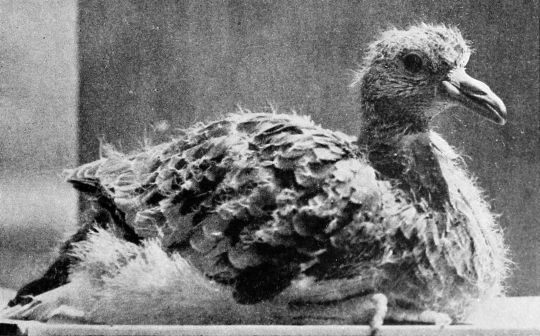
they were plentiful. they were obnoxiously plentiful, and yet humans took them out so cleanly and quickly and efficiently that from this species, from this five billion-strong species, we have only a single picture of a passenger pigeon squab.
these birds faded out of existence in the span of someone’s lifetime.
And now you know why we have the Migratory Bird Treaty Act. It’s not to inconvenience those who whine when you can’t keep a crow feather you found on the ground or a taxidermy owl without papers at an antique shop. It’s because by the time the law was passed in 1918 the commercial hunting of birds was so incredibly destructive that it was already to late for several species, and many others were on the brink.
We have a HUGE abundance of wildlife compared to how many places in the US were by the turn of the 20th century. Not just birds, but mammals and other species. From the MBTA of 1918 to the Endangered Species Act of 1973 to the Bald and Golden Eagle Protection Act of 1940, all of these and more are there to keep us from doing the same damned thing we did before. Only now we have SO MANY MORE PEOPLE who are sucking up even more habitat and other resources wildlife need.
I keep hearing that although Trump is a scoundrel or worse, at least he’s presiding over a great economy.
As White House economic adviser Larry Kudlow recently put it, “The
single biggest story this year is an economic boom that is durable and
lasting.”
Really? Look closely at the living standards of most Americans, and you get a
very different picture.
Yes, the stock market has boomed since Trump became president. But it’s
looking increasingly wobbly as Trump’s trade wars take a toll.
Over 80 percent of the stock market is owned by the richest 10 percent
of Americans anyway, so most Americans never got much out of Trump’s market boom
to begin with.
The trade wars are about to take a toll on ordinary workers.
Trump’s steel tariffs have cost Ford $1 billion so far, for example, forcing
the automaker to plan mass layoffs.
What about economic growth? Data from the Commerce Department shows
the economy at full speed, 4.2 percent growth for the second quarter.
But very little of that growth is trickling down to average Americans.
Adjusted for inflation, hourly wages aren’t much higher now than they were
forty years ago.
Trump slashed taxes on the wealthy and promised everyone else a $4,000
wage boost. But the boost never happened. That’s a big reason why Republicans
aren’t campaigning on their tax cut, which is just about their only legislative accomplishment.
Trump and congressional Republicans refuse to raise the minimum wage, stuck at $7.25 an hour. Trump’s Labor Department is also repealing a
rule that increased the number of workers entitled to time-and-a-half for
overtime.
Yes, unemployment is down to 3.7 percent. But jobs are less secure than
ever. Contract workers – who aren’t eligible for family or medical leave,
unemployment insurance, the minimum wage, or worker’s compensation – are now doing one out of every five jobs in America.
Trump’s Labor Department has invited more companies to reclassify
employees as contract workers. Its new rule undoes the California Supreme
Court’s recent decision requiring that most workers be presumed employees unless
proven otherwise. (Given California’s size, that decision had nationwide
effect.)
Meanwhile, housing costs are skyrocketing, with Americans now paying
a third or more of their paychecks in rent or mortgages.
Trump’s response? Drastic cuts in low-income housing. His Secretary of
Housing and Urban Development also wants
to triple the rent paid by poor households in subsidized housing.
Healthcare costs continues to rise faster than inflation. Trump’s response?
Undermine the Affordable Care Act. Over the past two years, some 4 million
people have lost healthcare coverage, according to a survey by the Commonwealth
Fund.
Pharmaceutical costs are also out
of control. Trump’s response? Allow the biggest pharmacist, CVS, to merge with
the one of the biggest health insurers, Aetna – creating a behemoth with the
power to raise prices even further.
The cost of college continues to soar. Trump’s response? Make it easier
for for-profit colleges to defraud students. His Secretary of Education, Betsy
DeVos, is eliminating regulations that had required for-profit colleges to prove they provide gainful employment to the
students they enroll.
Commuting to and from work is becoming harder, as roads and
bridges become more congested, and subways and trains older and less reliable.
Trump’s response? Nothing. Although he promised to spend $1.5 trillion to repair
America’s crumbling infrastructure, his $1.5 trillion tax
cut for big corporations and the wealthy used up the money.
Climate change is undermining the standard of living of ordinary
Americans, as more are hit with floods, mudslides, tornados, draughts, and
wildfires. Even those who have so far avoided direct hits will be paying more
for insurance – or having a harder time getting it. People living on flood plains, or in trailers, or without home insurance,
are paying the highest price.
Trump’s response? Allow more carbon into the atmosphere and make
climate change even worse.
Too often, discussions about “the economy” focus on overall statistics
about growth, the stock market, and unemployment.
But most Americans don’t live in that economy. They live in a personal
economy that has more to do with wages, job security, commutes to and from
work, and the costs of housing, healthcare, drugs, education, and home insurance.
These are the things that hit closest home. They comprise the typical
American’s standard of living.
Instead of an “economic boom,” most Americans are experiencing declines
in all these dimensions of their lives.
Trump isn’t solely responsible. Some of these trends predated his
presidency. But he hasn’t done anything to reverse them.
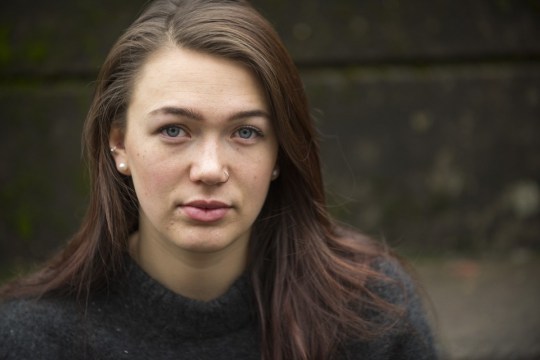
My name is Kelsey Juliana and I’m suing the United States government
for causing and accelerating the climate change crisis. I’m 22 years old
and I’ve been a climate activist for more than half of my life.
I know that young people like me, and others who have yet to be born,
have a right to a safe climate system. The constitution guarantees all
Americans the right to life, liberty, and property. But how is anyone
supposed to live a life of freedom amid a climate crisis? My own
government is violating my constitutional rights by its ongoing and
deliberate actions that cause climate change and it’s not right.
I, along with 20 other young people from around the country, filed a lawsuit against the federal government in 2015, called Juliana v. United States.
We’re not asking for money. Instead, we’re asking the court to order
the government to develop and implement a National Climate Recovery Plan
based on the best available science.
This plan should end the reign of fossil fuels and quickly
decarbonize our atmosphere so that we can stabilize our climate system
before it’s too late.
The longer we go without climate recovery, the more we risk allowing our climate to spiral completely out of control.
And the climate is spiraling out of control, no matter how many
politicians claim we’re experiencing normal fluctuations or, worse, a
“hoax.” All of the expert witnesses in our lawsuit say that we are
currently—already—in the “danger zone” and an “emergency situation” with
only 1°C of planetary heating. Allowing the planet to heat up any more
is not safe for our species, as well as so many others. And according to
the Trump administration’s most recent environmental impact statement,
the planet could heat as much as 7°F before the end of this century. We
cannot allow this to happen because we simply will not survive.
We originally filed our lawsuit against the Obama administration.
That administration tried to have the case dismissed, but the judge
ruled in our favor and found that we should be allowed to go to trial.
In 2017, the Trump administration inherited the lawsuit and it has
done everything in its power, employing every conceivable tactic, to
deny my fellow plaintiffs and me our right to present our case in court.
This administration is so fiercely attempting to silence our voices.
At this point, every level of the federal judiciary—the U.S. District
Court, the Ninth Circuit Court of Appeals, and the Supreme Court—has
denied the Trump administration’s efforts to have the case thrown out.
Yet it will not halt its efforts to avoid standard legal procedures and
confront us, the nation’s youth, in court.
Our trial is officially scheduled to begin on October 29, 2018 in Eugene, Oregon.
What we’re asking for could change everything.
My fellow plaintiffs and I want you with us as we head into the
courtroom to confront the United States government for knowingly
violating our constitutional rights. Supporters will hold rallies in
every state around the country, so if you can’t be with us in Eugene, find your local rally here.
Get regular updates by following @youthvgov on social media.
Tumblr: why do misogynists like to invalidate strong female characters???????????
If we’re going to be fair here, the reason so many people get upset when a female character is called a Mary Sue is because that label is thrown around so haphazardly and so very often handed to characters who really don’t deserve to be labeled as such. The controversy of the term comes from its overuse and misuse.
The term can be used correctly, but it is too often misused by people who see a capable strong female character and have a gut instinct to burn the witch and return to their male hero power fantasy.
“So, there’s this girl. She’s tragically orphaned and richer than anyone on the planet. Every guy she meets falls in love with her, but in between torrid romances she rejects them all because she dedicated to what is Pure and Good. She has genius level intellect, Olympic-athelete level athletic ability and incredible good looks. She is consumed by terrible angst, but this only makes guys want her more. She has no superhuman abilities, yet she is more competent than her superhuman friends and defeats superhumans with ease. She has unshakably loyal friends and allies, despite the fact she treats them pretty badly. They fear and respect her, and defer to her orders. Everyone is obsessed with her, even her enemies are attracted to her. She can plan ahead for anything and she’s generally right with any conclusion she makes. People who defy her are inevitably wrong.
The problem isn’t that characters are unrealistic. Heroes often are unrealistic and it’s ok to criticize media.
However, female characters are criticized where male characters aren’t.
Everything in OP’s post could apply to Luke Skywalker (and definitely applies to Anakin) but those characters won’t be criticized the way Rey has been (even though everything Rey does in The Force Awakens is believable). We are more willingly to believe in a male chosen one who can just do amazing things because he’s the hero.
Boys can have wishfulment stories but girls can only have realistic stories.
^^^^
So, there’s this interesting thing where a certain degree of saturation in stories will train the audience to just accept stuff that’d normally strike them as bizarre or unrealistic, and move on without questioning it. It’s sort of like ‘willing suspension of disbelief’, except that phrasing doesn’t really encapsulate it precisely. It’s more like… commonality breeds acceptance.
For example, a humble young boy who rises to prominence and becomes a hero is such a standard piece of storytelling, that virtually no one ever sits down to watch a movie and actually goes ‘well, but, this is just a young farm lad – surely he can’t do a single thing to help stop the Forces of Evil!’ People in the movie might do that. But unless the audience is very, very young, or has somehow managed to avoid most books, movies, songs, comics, television shows, and oral traditions for the whole of their life, they’re going to sit down and think ‘ah yes, here’s our guy’.
Even though, in real life, it actually IS still pretty far-fetched for Ye Humble Village Lad to turn out to be the only thing standing between mankind and destruction.
The interesting thing, though, is that if you change enough elements of what is so common as to be thoughtlessly accepted, the image you present will no longer resemble the familiar narrative. Even if, below the surface, the other components are exactly the same.
This, along with the above-mentioned misogyny, is another contributing factor to the Mary Sue thing.
Because there are fewer female heroes who are just unabashed power fantasies, embodying unlikely rises to success or mastery of untold skills, if you take a very typical story that stars a dude and swap him out for a lady, the elements once rendered invisible by familiarity, are now noticeable again. The audience is jolted out of complacency, and begins to think more critically about what they’re being asked to believe. (You can accomplish the same thing with other demographics, too, i.e. putting characters of colour in roles typically given to white actors, or having LGBT+ characters with the same abundance as straight ones, and so on and so forth.)
So even people who like to think of themselves as totally fair and unprejudiced can end up enforcing double-standards in entertainment. Because if you don’t catch yourself, you will not even realize that you managed to sit through three Iron Man movies without ever questioning the premise of Tony Stark’s genius, but somehow Shuri in Black Panther just struck you as ‘unrealistic’.
If you would report an undocumented immigrant to ICE you would have reported me to the Nazis and I don’t fucking trust you
A note:
I live in a state where you “have to” report anyone you suspect of being undocumented (that wonderful hellhole of Arizona). Now in practice this law has fallen far short, thank goodness. But if you live in such a place and they start enforcing it, here is how you get around it:
Assume everyone who doesn’t speak English is visiting.
Never ask about their job, because if they tell you they work here then you know they’re not visiting. You see them a lot for several weeks or months? Hm. Someone in the family must be ill. That’s terribly tough. They always dress in old, ratty laborers’ clothes? I feel you, my dude, I can’t afford new clothes either, and my dad has the fashion sense of an aardvark, so sometimes it’s not even about “affording” them. They say they’ve been here for years? You must have misunderstood. Spanish isn’t your first language, after all. First and last name? It never came up, or you don’t recall–you meet a lot of people.
And then, if you’re asked: no, you haven’t seen anyone residing illegally in the United States. Just people visiting.
Very good very important addition
Essentially, this is the civil society version of a work-to-rule strike.
Don’t do more than is expressly asked of you, and do what you are asked with such an intense attention to protocol that not asking you at all becomes more effective than even bothering.
In this case:
“Have you seen an illegal immigrant?”
“Could you describe an illegal immigrant, officer?”
*officer describes a person who is in the country without appropriate paperwork, or who has crossed the border illegally*
“No, sir, I haven’t seen any illegal immigrant.”
And this is correct. You have NOT seen an illegal immigrant, because you have no way of knowing if Jose Fulano is here legally or not. And since you can’t see his paperwork (or lack thereof), and did not personally see him cross the border illegally, you are only answering precisely the question asked.
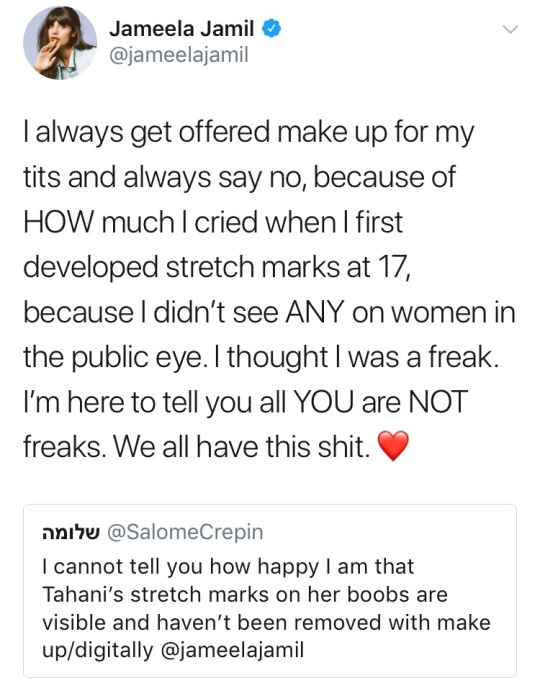
the most recent ep of the good place had tahani in a dress which showed prominent stretch marks and it made me so happy and here’s jameelas pov making me even happier !




 Site Title