in light of the Amazon strike, I wanted to offer some alternative online stores you can use INSTEAD OF Amazon for the upcoming months until the employees at Amazon are granted some basic common decency 🙂
rakuten.com – has nearly everything Amazon has
ebay.com – just be careful for scams!
newegg.com – for electronics/technology
emusic.com – music for as little as $1!! They also have a membership program where you can get music for even less!!
barnesandnoble.com – they have collectible items and childrens toys too!
This is great!
indiebound.org – books, and they make it easy to locate and purchase from local independent bookstores near you who Amazon would otherwise be putting out of business
bookdepository is great for books, and has free worldwide shipping so there’s that too
*******PLEASE DON’T LEAVE DISHES OF SUGAR WATER OUT*******
Post from a beekeeper
Oh dear – I keep hearing tips about leaving bowls of sugar water out to “help” keep bees hydrated. Please, please, please DON’T. Bees are really good at finding what they need and there are so many reasons not to do this. The MOST IMPORTANT reason is that if you within 3 miles of some hives (and most people are) if the bees find the sugar water they’re going to think its a great source of easy food, go back to the hive and recruit more bees to come and collect the “food” and before you know it you’ll have 1.000s and 1,000s of bees descending on your garden/balcony – a very scary sight. This is known as robbing and as beekeeper I’ve seen this a couple of times – once started it is impossible to stop until the source of the “food” has gone.
Other reasons not to do this are – sugar water is essentially “junk” food for bees. Its full of carbohydrates which will give them an energy burst, but has no other nutritional value unlike the food they should be having i.e. nectar.
Honey bees will store this as honey in the hive. The beekeeper unknowingly may end up extracting and selling this as honey later in the year. You don’t want to buy sugar syrup and the beekeeper doesn’t want to be prosecuted for selling a product which isn’t honey.
This is also an easy food source for social wasps.
By all means give a tired bee a drink of sugar water on a spoon, but please don’t leave it out for them.
If you want to help bees there are lots of ways you can do this from planting nectar rich plants or leaving out bowls of water with gravel/small pebbles in so they can access the water which they would be very grateful for.
PLEASE SHARE THIS AND TELL ALL YOUR FRIENDS
Edited – It appears that a lot of the advice I have seen about leaving out sugar water stems from advice from DAVID ATTENBOROUGH. He was absolutely right in his advice, but his advice was if you see a struggling bee to put some sugar water where the bee could reach it – not to leave out bowls of sugar water. Unfortunately it seems like, as usual, media publications have misquoted advice and not done their research
Also please don’t feed bees honey. Surprisingly they don’t eat honey – they eat nectar. Honey bees make honey for their own use during the winter months, but bumble bees collect and use nectar as and when they need it.
This is the greatest map I have ever seen. I want an interactive version where you can click on any city in the world and get a pop-up list of all the climate-equivalent cities.
so it turns out this exists and it makes a fine rabbit hole for passing the time during a conference call
Try to remember that your partner might need more explanation for your thought process than you think is necessary, especially if it’s a “negative” thought.
“I disagree with you” –> “I disagree with you, but I’m not angry at you, and I’m not going to yell at you for not agreeing with me.”
“I’m hurt by what you did” –> “I’m hurt by what you did, but I don’t hate you, and I don’t think you’re a bad person. I just want to discuss it.”
“I’m frustrated” –> “I’m frustrated, but it doesn’t mean I don’t care about you.”
What feels obvious to you–the underlying asumption that of course you still love this person, of course this is just a single feeling–is not obvious to someone who has been trained to flinch at every criticism. Take the time to explain your feelings and their meanings to ease both your fears.
Why does this need to be addressed? Because cptsd involves a power imbalance with someone you had a relationship with (partner/caregiver, etc.) that abused their power with you continuously.
The aftermath of the abuse leaves you now more conditioned to believe that someone does not love you if they express any negative tone towards you. This helps with assurance and validation.
I think I left the teller at the bank genuinely disturbed when I told him that “If I can’t afford it, I just don’t buy it.” “What about a car? Do you drive a car?” he inquired, his voice toning on the edge of fear. I told him, “Yeah, I have a vehicle. I bought it used for under $3,000.” He looked physically pained. “What about if you want to buy some kind of new appliance? Or furniture?” he persisted. I stared at him blankly. “My couch was $5.00 at Goodwill. Like…I just buy shit cheap or I don’t buy it at all. The only thing in my life that I make payments on is my house, my bills, and my insurance, and that’s split five ways because I have housemates.” The young man looked horrified? Appalled? And somehow also awed? This guy couldn’t have been much older than me. But it seemed that he’d never even considered the option before of saving up for something to purchase it outright instead of using a credit card. Am I the only person in my general age group (just turned 26) who’s never owned a credit card, and who has forgone basic comforts in order to save up for items so you don’t owe money to anyone, like, ever?
If you’re living in the US without a credit card at 26, you’re playing with danger.
No credit is viewed as the same as bad credit. Which means you could be denied if you ever do need to rent an apartment or a car. Hospitals and clinics are also less likely to allow payment plan programs for people without good credit.
The best thing you could do at this point is apply for a credit card you’re eligible for and pay a few things (I do gas and groceries myself) with it each month. As long as you keep it to zero balance each month there is no interest and there will be proof of you not having debt (instead of just the absence of debt).
what.
This is legit how it works. The system requires records on you, or else. So you need a credit card and worse, you need to have a record of using it, even if you pay it off every single month. Unfortunately, the formulas used to determine credit score are secret, so we also have people suggesting that your credit rating is helped if every so often you do pay a bit of interest. The whole thing is a complete mess. If you don’t have a credit rating/history, then any loans you manage to get will be at extremely high interest and will require much more effort than they really should.
what
yeaah let me just go get a card that i can’t pay off because capitalism is shit, even if i literally only buy a pack of gum that’d go well
If you pay it off in full every month there is no interest. Do what OP is doing but put some of that on your credit card and pay it off every month, and soon you will have a very good credit rating.
you skipped right the fuck over the “can’t pay it off” part huh
like credit cards are just not a viable thing if you’re poor and have shit income
And I’m saying to literally not put anything on it if you can’t buy it in cash. And I’m aware that they fuck over poor people, but yeah, that’s the system that’s in place. This is advice for navigating it, which is how to obtain good credit which helps a lot.
Right like don’t make minimum payments, put your gas on your credit card then that same day pay the credit card company online then don’t worry about it for another month. It’s an absolutely shit system, but in the event of an emergency it’s good to have.
I have had to explain this to a lot of people in my life, but it’s true- no credit is the same as bad credit. What having (and using) the card actually shows is that you are capable of (and actually follow through on) making regular payments: ie, it is proof of having a steady income (even if you do not actually have a steady income). It is showing you reliably can pay for things you purchase, which is what your credit score is all about.
Think of it this way. You have a credit card, which is your credit tracking device. You use the card to tell someone “I will pay for this thing with borrowed money.” They agree to allow you to pay with borrowed money. You then turn around to your credit card company and say “Thank you for allowing me to borrow your money, I will now pay you back with my own money.” (which, if you repay them promptly enough, you can repay them the exact same amount you borrowed, rather than paying them more than you borrowed [which is what interest is])
The credit card company then recognizes that you successfully borrowed their money AND returned it safely, and they pass that information along to credit tracking companies. Each time you do this, you gain credibility. If you do this enough times, you are considered a credible borrower of money, so that if you ever are in a situation where you need to borrow a large sum of money (for example, a mortgage or a car or a hospital bill or whatever), companies with money will look at how well you have returned money in the past, and say Ah yes, this person repays their debts well, so we can lend them our money this time.
So like, do what the above folks are recommending. Get a credit card and use to to reasonably purchase things you already have to buy- put a batch of groceries on the card. Go home (or wherever you can use the interne), pay it off as if you had paid cash in the store for it. There is no extra fee or interest for doing this, and you are leveling up your credibility in case of emergency later on in life.
Ok, here’s a guide for the easiest way to do this.
1. get your first baby credit card with the bank that you already bank with. If it has cashback rewards, even better (that’ll be free money later).
2. set that shit up so it pays the full amount, automatically, every month. you don’t have to remember to go home and pay it off, or worry about it at all. You won’t pay interest.
Your first card, especially if you have no credit, is going to have a small limit. Like $500. This is important: credit companies want you to use a certain percentage of the card every month. This is 1-9%. I usually just go straight 5%. If you use too much, you look like a wild card (even if you pay it off every month) and if you use nothing than you’re not proving to them you can be trusted.
So your first card has a $500 limit. 5% of 500 is $25.
Your goal is to use $25/month.
This is about a tank of gas for me. So once a month, I would fill up with this card, and then put it in the back of my wallet until next month. The payment was made automatically by my bank from one account (debit) to the other (credit). Rinse and repeat. I did this for a year.
Then after a year, my credit had skyrocketed (because I had nothing before, and added this good habit for a year). So I called up my bank and asked for them to increase my limit based on my new credit. I had shown them I was good at borrowing a good amount of money and paying it back on time every time.
The bank increased my limit to $5,500. Like holy shit, at the time I was definitely not expecting that.
So new math. 5% of 5500 is $225. So now instead of gas, I put my cell phone bill ($50), my car insurance ($130), and my dog food automatic order ($40) on it.
The best part is everything is automatic. I keep this card in the back of my wallet permanently; all these bills and the automatic payments are, well, automatic. My credit goes up, I rack up cash back rewards, there’s nothing to it.
And, if I ever get in an emergency, like a vet bill for one of my dogs, I can use that card to pay the $3,000 emergency bill without worrying about whether the place will take my dog if I have no money. I can then go home, change the settings from “pay in full every month” to “pay $X every month” (more than the minimum!) until it’s paid off, and then go back to just my bills. My credit might take a little dip during that time, but will bounce back pretty quickly.
There’s several other factors to credit (hit me up if you want more info) but this was literally the only measure I took for my first year, and my credit went from 525 to 700 in a year. Another year later, I’m now at 753, have a mortgage with a great rate, and can get a monster ass loan if I really need it in case an emergency or hard times fall.
It’s a shitty system of hoops to jump through, but knowing you can use these measures if it comes to it is a good feeling.
Okay but literally read this entire post please!
Take it from someone who was taught that credit cards are evil, you NEED to build up some credit.
I’m 32 and only JUST NOW able to get a card because my fiance helped me do so. I could not get approved before because I didn’t have any credit.
If you’re like me, I had absolutely no credit history at all and couldn’t get a card no matter how hard I tried, so I went to my bank and got a secured loan with my savings. Basically I gave them $500 and they let me borrow $500. Then I set it to autopay every month from the money I borrowed. So basically, I’m paying them back with the money I borrowed. When I finish paying it off I’ll owe a bit of interest ($9), but I’ll get back the $500 I put as collateral and now I exist in the credit system and can hopefully get a credit card for gas to pay off each time.
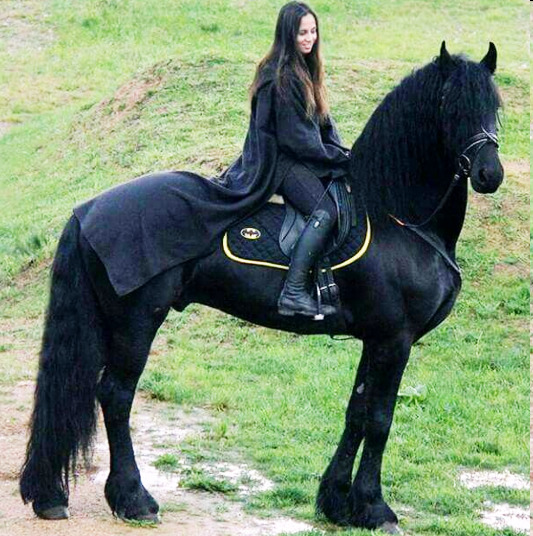
Big Horses are a Very New Thing and they Likely Didn’t Exist in your Historical and/or Fantasy Settings.
You’ve all seen it in every historical piece of media ever produced. Contrary to popular belief, a big black horse with long legs and long flowing mane is not a widespread or even a particularly old type of horse.
THIS IS NOT A MEDIEVAL THING. THIS IS NOT EVEN A BAROQUE THING. THIS IS A NINETEENTH CENTURY CITY CARRIAGE HORSE.
All the love to fancy Friesian horses, but your Roman general or Medieval country heroine just really couldn’t, wouldn’t, and for the sake of my mental health shouldn’t have ridden one either.
Big warmblood horses are a Western European and British invention that started popping up somewhere around 1700s when agriculture and warfare changed, and when rich folks wanted Bigger Faster Stronger Thinner race horses. The modern warmblood and the big continental draught both had their first real rise to fame in the 1800s when people started driving Fancy Carriages everywhere, and having the Fanciest Carriage started to mean having the Tallest and Thinnest Horses in the town.
Before mechanised weaponry and heavy artillery all horses used to be small and hardy easy-feeders. Kinda like a donkey but easier to steer and with a back that’s not as nasty and straight to sit on.
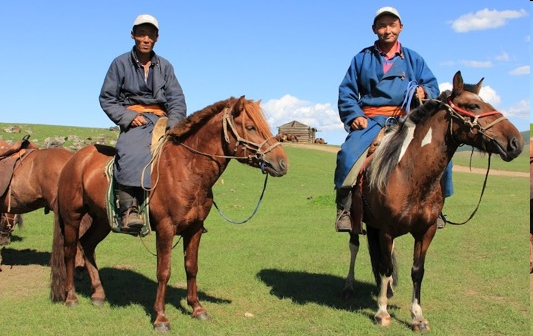
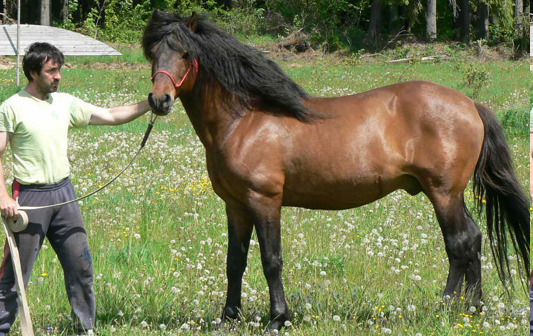
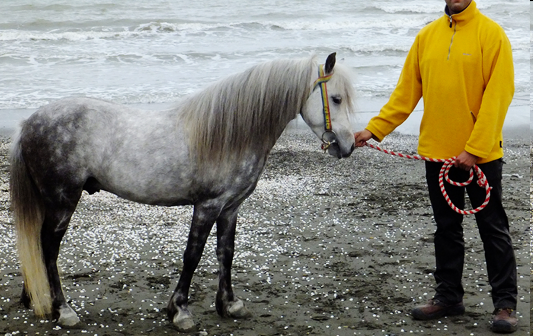
SOME REAL MEDIEVAL, ROMAN, OTTOMAN, MONGOL, VIKING, GREEK and WHATEVER HISTORICALLY PLAUSIBLE HORSES FOR YOU:
“Primitive”, native breeds all over the globe tend to be only roughly 120-140 cm (12.0 – 13.3 hh) tall at the withers. They all also look a little something like this:
Mongolian native horse (Around 120-130 at the withers, and decendants of the first ever domesticated horses from central Asia. Still virtually unchanged from Chinggis Khan’s cavalry, ancestor to many Chinese, Japanese and Indian horses, and bred for speed racing and surviving outdoors without the help of humans.)
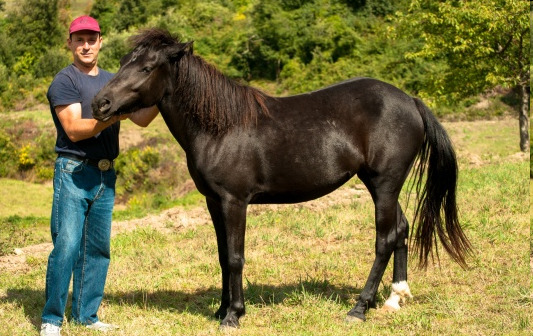
Carpathian native horse / Romanian and Polish Hucul Pony (Around 120-150 at the withers, first mentioned in writing during the 400s as wild mountain ponies, depicted before that in Trajanian Roman sculptures, used by the Austro-Hungarian cavalry in the 19th century)
Middle-Eastern native horse / Caspian Pony (Around 100-130 at the withers, ancestor of the Iranian Asil horse and its decendants, including the famous Arabian and Barb horses, likely been around since Darius I the Great, 5th century BC, and old Persian kings are often depicted riding these midgets)
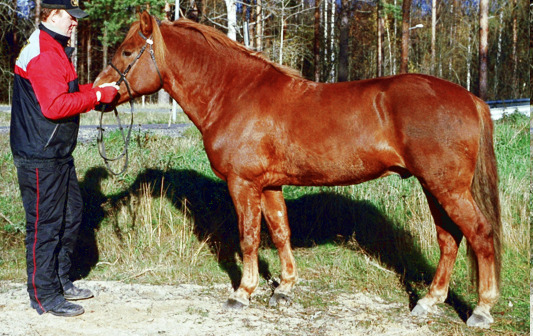
Baltic Sea native horse / Icelandic, Finnish, Estonian, Gotland and Nordland horses (Around 120-150 at the withers, descendant of Mongolian horses, used by viking traders in 700-900 AD and taken to Iceland. Later used by the Swedish cavalry in the 30 years war and by the Finnish army in the Second World War, nowadays harness racing and draught horses)
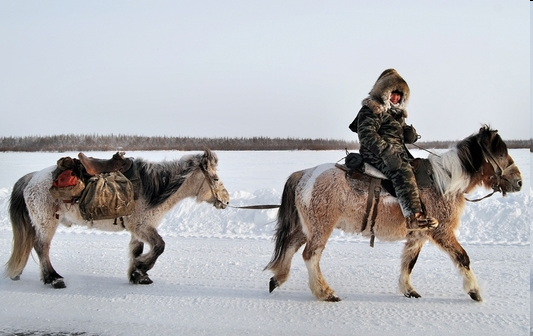
Siberian native horse / Yakutian pony (Around 120-140 at the withers, related to Baltic and Mongolian horses and at least as old, as well-adapted to Siberian climate as woolly mammoths once were, the hairiest horse there is, used in draught work and herding)
Mediterranean native horse / Skyros pony, Sardinian Giara, Monterufolino (Around 100-140 at the Withers, used and bred by ancient Greeks for cavalry use, influenced by African and Eastern breeds, further had its own influence on Celtic breeds via Roman Empire, still used by park ranger officers in Italy)
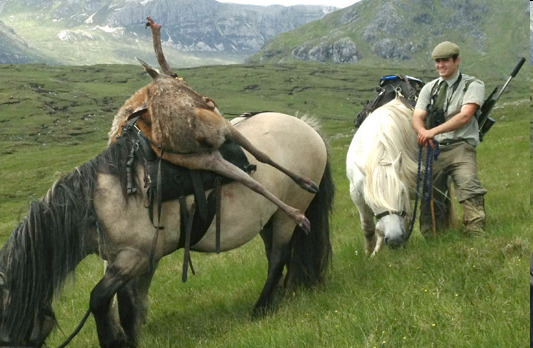
British Isles’ native horse / various “Mountain & Moorland” pony breeds (Around 100-150 at the withers, brought over and mixed by Celts, Romans and Vikings, base for almost every modern sport pony and the deserving main pony of all your British Medieval settings. Some populations still live as feral herds in the British countryside, used as war mounts, draught horses, mine pit ponies, hunting help and race horses)
So hey, now you know!
I love this so much – and now I know why Tall Lanky Thin horses have a terryfying vibe to them, and the “primitive” native pony-like breeds awake in me only hope and trust.
such valid historical finger-eaters here
Okay, so, you got me, I’m a horse person. I used to take riding lessons and would read tons of books about horses as a kid and teenager. You could definitely say I was that weird horse girl, and I really have to say even though this is really informative about the native types of equines in the general European and Middle Eastern areas how FULL OF BS THIS POST IS, SO BUCKLE UP BUTTER CUPS YOU ALL ARE GONNA DO A LEARN TODAY.
So what OP said about the Roman General not riding a Middle Ages war horse is actually correct and here’s why: The Western Roman Empire fell BEFORE THE MIDDLE AGES BEGAN AND IS WHAT TRIGGERED THE BEGINNING OF THE MIDDLE AGES IN THE GODDAMN FIRST PLACE. And for those of you who aren’t aware, the Middle Ages was roughly a 1000 year period that consisted of the 5th through the 15th Century; aka. 400AD-1400AD, and ended with the beginning of the Renaissance. (x, x)
First off, NONE OF THOSE ARE HORSES. THOSE ARE PONIES. You cannot ride ponies into battle while dressed in a full suit of armor because their legs would buckle out from underneath them because they simple aren’t large enough or strong enough o be able to carry the weight of a knight in plate armor. Hence the term WARHORSE. OP literally names off a bunch of PONY breeds, and while ponies were used commonly back then as cart and pack animals, they were not used in battle and thus would be bad steeds for fantasy and historical fictional characters that planned on doing any sort of fighting.
Secondly, the Fresian horse breed certainly WAS around during the Middle Ages because it originated in the Netherlands before the 4th Century and is literally known as the ‘Knight’s Breed’ because their size, strength, and stamina that allowed them to be able to carry the extra weight of a knight, his armor, and the armor the horse would be wearing as well. (x)
AND LASTLY, I’M GONNA HELP OUT ALL MY WRITER FRIENDS BY WRITING UP WHAT MIDDLE AGE WAR HORSES ACTUALLY WERE NAMED, THEIR USES, AND WHAT THEY MIGHT HAVE LOOKED SOMETHING LIKE.
Oh thank god someone wrote the post so I didn’t have to because the original post just had me all what the actual fuck are you smoking.
OH THANK GOD I had that reaction to the original post but was too tired to go hunt shit up because yeeeeahaha fuck no. Also bless @jltillary for the super useful all-in-one-place link.
Also: where are the mentions of changes in human height and size over time? I mean, horse sizes have also changed, but not as dramatically as humans.
Note that the OP is completely fucking right about horses historically being smaller than we think of them today, just for the record–horses have grown dramatically in size, in part because so have humans and in part because increasing agricultural output and wealth during the eighteenth and nineteeth centuries encouraged the specific development of very large, heavy draft horses to perform certain industrial tasks before being replaced with machines in the early to mid twentieth century. I do, however, agree that the specific choices they’ve displayed are… not particularly historic, since they’ve predominantly chosen modern pony breeds without necessarily considering the modern context of those animals, either. Or, frankly, the size of what it means to be a pony. 120cm to 130cm is just too damn small; we’re mostly looking from numerous Roman and medieval sources at a range closer to 138-153cm for most of European history, and only the means within that range seem to really change. For context, that is the size of your average Quarter Horse population if you aren’t constantly crossing them on real tall, gangly Thoroughbreds. It’s a very mid-range horse size.
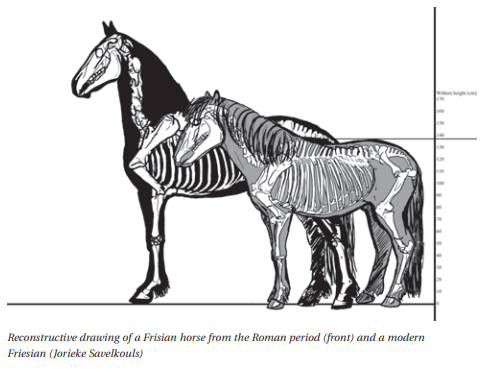
For context, these Roman horses ranged from 13.1 hands up to 15.3 hands, with an average size of about 14 hands. Here’s an image of a Roman-era Frisian horse against a modern-day Friesian, taken from a paper on Friesian history I’ve cited below:
(Frisian horses did increase in size between the small Roman animal pictured in front and the modern animals, it is true–but throughout medieval Europe, even in Frisia the average equine size continued to range about 13.3 to 15.3 hands or 140-150cm at the withers. Not remotely the size of a modern Friesian! Although this is not the size of the small ponies mentioned by the OP, either.)
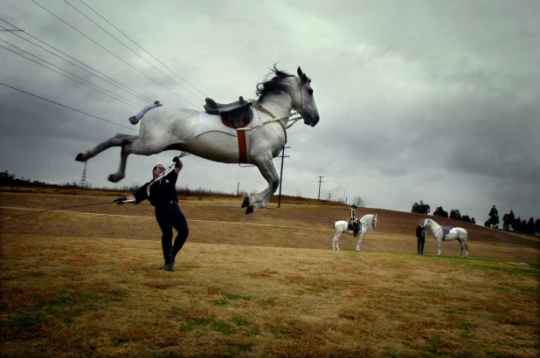
I gotta say LOL wtf at the Lipizzaner under “coursers,” though–they’re warhorses, that’s the point of airs under saddle. They’re built for collection first, strength second, and speed as a distant third. There’s an inherent tradeoff between speed and collection–you can think of that like balance or agility–and in a warhorse, you want to have collection before speed so you can turn quickly and pivot away from a foot soldier or encourage your horse to body slam someone, etc. You also want the poise to pull off, say, leaping up into the air and slamming your hind legs back to kick someone in the head. Lipizzaners are aaaalll about balance and centre of gravity, and it shows in a few notable points of their conformation.
More on that below.
In general, the courser lists don’t appear to really understand what these breeds specialize in any more than the list of ponies does. You’ve got the Arabians–who genuinely are animals I’d call coursers, being typically specialized for long-distance endurance, except that the specific animal pictured is an Egyptian Arabian typically specialized for having pretty heads and trotting around with a flat top like a conformation dog, not so much the current lines of performance Arabians preferred for endurance work which are built a little differently. (Akhal Tekes also fall into this category legitimately, to be fair.)
You have the Lipizzaner, which as I said is not built for speed or particularly endurance. And then you have a Fjord, which is an all-around type breed–I’d actually put them right next to the Haflingers in terms of body type, conformation, and ability. They’re best, if anything, for strength, not really speed.
I would actually put the Lipizzaner as the quintessential modern example of a destrier. Destriers genuinely weren’t as big as people seem to think, and the modern Percheron and Friesian may have roots in old destrier lines but both breeds have inarguably changed since–the Percheron specialized as a heavy draft horse and the Friesian as a carriage horse, and both are now changing again as people breed either with an eye to riding or, in the case of Percherons, as four-in-hand driving show specialists. The Shire? LOL, no. The progenitor of what we today call the Shire is the Old English Black, which spent considerable time as a carthorse being selected for that skill and everything that comes with that. Gypsy Vanners are similarly descended from British cobs, which means that these are the descendants of animals who have been selected primarily as… small carthorses and draft horses. Very similarly, I should add, to the Haflinger listed above! (The Morgan also, but to a much, much more limited extent. Morgans have always been very multipurpose horses.)
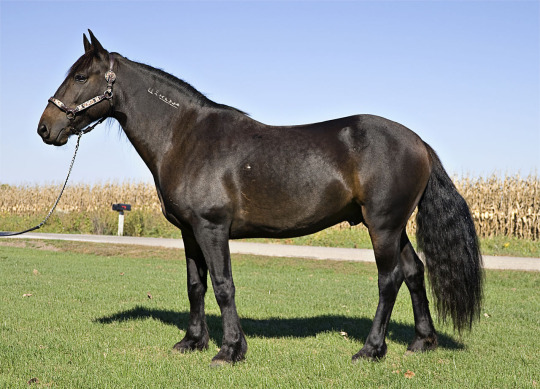
Look, even if these carthorse and carriage breeds are descended from warhorses and warhorse lines, which I do actually find quite possible… they had a good 350 years past the point when anyone was really engaging in medieval-style warhorse combat for these horses to live on, and you don’t keep horse breeds around just out of historical interest! Horses are bloody expensive, and all breeds and lines of animals change over time to suit current tastes and, more importantly, current uses. No one wants to breed Percherons that are medieval-accurate destriers, eating their fool heads off, when good logging drafts are in high demand. So choosing modern animals to represent medieval specialists is a matter of thinking about the demands of given medieval equine jobs and thinking about the conformation and temperament that fulfill those jobs today. If you’re attached to the notion that Friesians are living replicas of the warhorse from the 1300s, I invite you to consider this much more thorough dissertation of the history of the modern Friesian by a scholar of the breed.
(I see the same thing happen when people want to talk about modern dog breeds in history. Look, I’m sorry, but your fat-ass English Mastiff without enough muzzle to breathe properly and a nose with no holes in it is not the same thing as the war mastiffs the Spanish used to rip the shit out of indigenous people. It’s just not. Most modern dog breeds have been exaggerated to conform to modern sensibilities and modern needs, and as such they don’t bear much resemblance even to their ancestors a century ago, let alone types of dogs kept by medieval people who were actually using dogs to do a job. But it’s very tempting to trace breed lineages back into the misty, romantic edges of yore, so… that’s apparently what we’re doing.)
So okay. Here’s the animals I would pick as showpoints, if I was going to pick a list of modern horse breeds to represent medieval types. I’m making efforts to pick photos that let you get a little bit of a better look at the side of a horse so you can see what kinds of structure we’re talking here. After all, in medieval Europe these horses would be purpose bred, not pedigreed, so structure would effectively have defined them.
Rouncey
I’m not bothering with the rouncey, because frankly basically any basic hack qualifies; QHs are actually specialized for different things, notably short-distance speed, but frankly they’re so common that you wind up with more or less the same effect. If you’re not particularly any one thing, you count as a rouncey. Here’s a mustang, if you want an image. The mean of medieval and early post-medieval horses does seem to have been about 14 hands: technically pony sized, but not necessarily the small ponies that the OP demonstrated. Fortunately, that is also the size of your average mustang, give or take a couple of inches.
Courser
Here’s a modern horse that I think would resemble a quite good courser. This is an endurance-bred Arabian with plenty of experience. Note that he is built perfectly level, with relatively light legs (though still with plenty of bone for durability). His neck isn’t too long, unlike the Egyptian Arabian pictured above, which means that he isn’t unbalanced and won’t find it hard to manage his breathing. He has a deep, deep chest–look at how far down his leg it moves past his elbow–which gives him plenty of room for big lungs and heart, allowing him better respiratory efficiency. Note that he does not have particularly powerful hindquarters. For an endurance horse, you don’t need them–it’s more important to have slow-twitch musculature that can keep going efficiently, and the more evenly the horse is built (that is, the closer its back is to being parallel with the ground), the more efficiently all motion is converted to forward motion. This horse is never going to win a sprint race against a Quarter Horse, but he will be fast across distance and would have been much prized by anyone who routinely needed to send messengers on horseback.
Palfrey
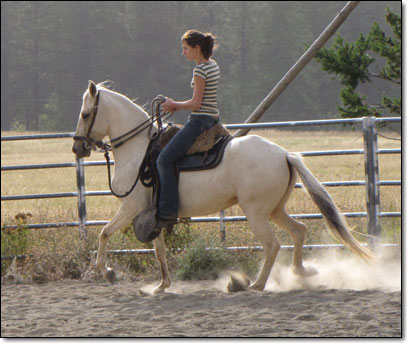
This medieval type wasn’t mentioned, but I happen to like it–especially since I’m used to the modern representatives of the type being rather overlooked, especially in this context. A palfrey refers to what we would today call a gaited horse, which is particularly comfortable to ride, especially over long distances. (They are also reasonably popular in endurance riding for this reason, although they are not as fast.) This is a Paso Fino mare, chosen because they are reasonably middle-sized and also because they are a Spanish breed, which squares with the tendency to refer to palfreys as similar to or synonymous with jennets, often from Iberia. It’s not easy to identify a gaited horse from a still side shot, so here’s what a gait looks like.
Destrier
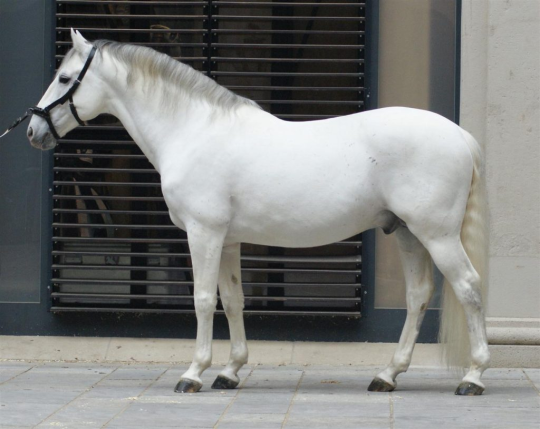
I did say I intended to make a case for Lipizzaners as the prototype medieval destrier, didn’t I? This is a stallion on loan from the Piber stud. So. Let’s point out that Lipizzaners are probably the only line of animals still bred (via the stud at Piber) to perform airs under saddle; while these are framed as being for the betterment of the horse’s riding ability, it is perhaps instructive to consider who first thought training a horse to rear up on its hind legs in a controlled fashion and hop forward with forelimbs raised or to leap through the air and kick as he comes down was a wise idea, and why someone might have thought this at all. It is also worth noting that the Spanish riding style from which dressage comes from is primarily used today in bullfighting, whereupon it becomes immediately evident why you’d want a balanced horse who can immediately shift back on his hindquarters and move in any direction very quickly.
What I want you to notice about this stallion is that he is not very large–Lipizzaners range from about 14.2 to 15.2 hands–but man, is he compact. He has a short back, a strongly muscled loin, a wide, powerful hip, and a thick, flexible neck. (Lipizanners often startle horse people for looking less like the glamorous Amazons we automatically expect expect and more like chunky, short little fat-necked white blobs; the shorter neck is actually helpful for balance and collection as long as it is flexible.). He also has good depth through the heart girth and while his legs are not particularly long, they are well boned. He is built slightly uphill if you draw a line from the point of his hips to the point of his withers. This is a horse built for agility and flexibility, but not necessarily speed. He is relatively strong for his size–this is a horse who will carry a much heavier rider relative to his height than a longer-backed, and who won’t experience a lot of exertion doing it. And his size is the size we most often find in zooarcheological digs of European medieval military horses.
My friends, this short fat little white pony is probably the most authentic warhorse you’re going to see any time soon. He’ll eat less than any Shire, too, and be much easier to turn and move quickly on the field–particularly given that medieval armor was a lot lighter than the same Victorians creating horses of sizes never seen in recent years liked to imagine.
Execrable puns notwithstanding, The Veggie Patch already exists.
(Totally check it out if you have the time. It has telepathic hive-mind broadleaf weeds and an organised crime family of nefarious Brussels sprouts.)
The one thing I need to know: Can I play a potato?
[Transcript: an excerpt from The Veggie Patch, reading: “Potato: When they walk, potatoes look like large green spiders. Many Veggies feel unsettled by them and avoid them if they have a chance. Despite this treatment, potatoes are very kind and generous to those who make the effort to get to know them. Potatoes value friends above everything else, and will do everything they can to help a friend in need.” An illustration of a smiling potato plant appears inset to the right of the text.]
aka “I’m a 22 year old newb and needed to find some resources”. Here’s what I’ve found so far that has really helped me! Lots of these are youtube tutorials; I find it more helpful to see someone doing it rather than just reading about it.
*Important Note: Some of these brands may or may not be sold in other countries that require animal testing by law in order for the products to be sold, but I don’t have the time to research animal testing laws outside the US as well as what brands sell in those countries. So I’m leaving this one up to you.
Okay, this has been in my drafts for at least 3 months now. Time to roll it out! Keep in mind, these are videos/bloggers that helped me specifically and there may be some videos/links that aren’t as useful to you. That’s okay! I recommend you get lost in the beauty blogger side of youtube at some point, it’s a lot of fun and you never know what you’ll find!
And on a last note of disclaimer: I don’t follow the personal lives/twitter feed/rumors about anyone in these videos. I don’t know if someone is problematic or not, I am simply recommending the video.
wonderful resource for nonbinary/trans people who have a desire to wear makeup, but were never taught because of gross gender roles
I’ve been living with the effects of complex trauma for a long time, but for many years, I didn’t know what it was. Off and on throughout my life, I’ve struggled with what I thought was anxiety and depression. Or rather, In addition to being traumatized, I was anxious and depressed.
Regardless of the difference, no condition should ever be minimized. If you are feeling anxious or depressed, it’s important and urgent to find the right support for you. No one gets a prize for “worst” depression, anxiety, trauma or any other combination of terrible things to deal with, and no one should suffer alone. With that in mind, there is a difference between what someone who has Complex PTSD feels and what someone with generalized anxiety or mild to moderate depression feels.
For someone dealing with complex trauma, the anxiety they feel does not come from some mysterious unknown source or obsessing about what could happen. For many, the anxiety they feel is not rational. General anxiety can often be calmed with grounding techniques and reminders of what is real and true. Mindfulness techniques can help. Even when they feel disconnected, anxious people can often acknowledge they are loved and supported by others.
For those who have experienced trauma, anxiety comes from an automatic physiological response to what has actually, already happened. The brain and body have already lived through “worst case scenario” situations, know what it feels like and are hell-bent on never going back there again. The fight/flight/ freeze response goes into overdrive. It’s like living with a fire alarm that goes off at random intervals 24 hours a day. It is extremely difficult for the rational brain to be convinced “that won’t happen,” because it already knows that it has happened, and it was horrific.
Those living with generalized anxiety often live in fear of the future. Those with complex trauma fear the future becauseof the past.
The remedy for both anxiety and trauma is to pull one’s awareness back into the present. For a traumatized person who has experienced abuse, there are a variety of factors that make this difficult. First and foremost, a traumatized person must be living in a situation which is 100 percent safe before they can even begin to process the tsunami of anger, grief and despair that has been locked inside of them, causing their hypervigilance and other anxious symptoms. That usually means no one who abused them or enabled abuse in the past can be allowed to take up space in their life. It also means eliminating any other people who mirror the same abusive or enabling patterns.
Unfortunately for many, creating a 100 percent abuser-free environment is not possible, even for those who set up good boundaries and are wary of the signs. That means that being present in the moment for a complex trauma survivor is not fail-proof, especially in a stressful event. They can be triggered into an emotional flashback by anything in their present environment.
It is possible (and likely) that someone suffering from the effects of complex trauma is also feeling anxious and depressed, but there is a difference to the root cause. Many effective strategies that treat anxiety and depression don’t work for trauma survivors. Meditation and mindfulness techniques that make one more aware of their environment sometimes can produce an opposite effect on a trauma survivor. Trauma survivors often don’t need more awareness. They need to feel safe and secure in spite of what their awareness is telling them.
At the first sign of anxiety or depression, traumatized people will spiral into toxic shame. Depending on the wounding messages they received from their abusers, they will not only feel the effects of anxiety and depression, but also a deep shame for being “defective” or “not good enough.” Many survivors were emotionally and/or physically abandoned, and have a deep rooted knowledge of the fact that they were insufficiently loved. They live with a constant reminder that their brains and bodies were deprived of a basic human right. Even present-day situations where they are receiving love from a safe person can trigger the awareness and subsequent grief of knowing how unloved they were by comparison.
Anxiety and depression are considered commonplace, but I suspect many of those who consider themselves anxious or depressed are actually experiencing the fallout of trauma. Most therapists are not well trained to handle trauma, especially the complex kind that stems from prolonged exposure to abuse. Unless they are specially certified, they might have had a few hours in graduate school on Cluster B personality disorders, and even fewer hours on helping their survivors. Many survivors of complex trauma are often misdiagnosed as having borderline personality disorder (BPD) or bipolar disorder. Anyone who has sought treatment for generalized anxiety or depression owes themselves a deeper look at whether trauma plays a role.
hey writers if you want to make a metaphor for racism, please maybe remember that racism is literally based on nothing. Africans weren’t enslaved en masse because the Robo-Musa threatened to destroy the world, they were enslaved because it was economically rewarding and politically convenient. If at any point your allegory for racism includes “so <oppressed group> did this major catastrophe and” then you have not only missed the point but you are literally reinforcing the ideas that racism have let racism self-perpetuate (that e.g. black people are naturally dangerous and violent and must be contained or begrudgingly accepted by the Nice White People)
Just a personal note on this, ‘cause I’ve had some folks ask me how orogenes in the Broken Earth trilogy can be an allegory for oppressed groups, given that orogenes actually are dangerous.
I was completely aware of the Unfortunate Implications of orogenes as black people/Jewish people/closeted queer people/neuroatypical people and having Special Powers. That was the point, actually. At the time I was early in THE FIFTH SEASON, I was watching Ferguson unfold, and listening to Darren Wilson’s bullshit about how Mike Brown seemed superhuman (or subhuman) to him. And the whole time I kept thinking, “So-the-fuck-what if he was a demon? He was still an unarmed 18 year old whom you shot 10 times while he was running away.” From that to stories of doctors assuming black people aren’t capable of feeling pain to the same degree as white people – I was just done with it. Fucking done.
Because it should not matter if we are big, or dark-skinned, or wearing “villain clothing” like hoodies, or whatever. All that shit’s just an excuse anyway; racist white people are scared of us when we’re small and light-skinned and wearing business suits. The problem isn’t us. The problem is chickenshit white people and the imaginary monsters they carry around inside them.
And over the course of the Broken Earth trilogy I poked at this notion. The society of the Stillness could at any point choose to accommodate orogenes in a way that is safe for all… but it chooses not to. Orogene parents have no trouble raising orogene kids. Orogenes in communities police each other the same way non-orogenes do – because at the end of the day, they’re all people. Even if some of those people are extraordinary, they can live together if there is respect.
Black people are extraordinary in so many ways. Not superhuman, obvs – but we aren’t white, which is what this society insists upon calling “normal.” We will never be white, and that’s fine. We will never be “ordinary” in the eyes of racists – and we shouldn’t have to pretend otherwise. We shouldn’t have to stoop if we’re naturally tall, or speak softly if we’re naturally deep-voiced, just so that small-minded people will be less afraid in our presence. Our children shouldn’t have to think and act as if they’re older than they are, just because white people misjudge their ages. The problem isn’t us. And a good, diverse society, one that actually accommodates and respects all of its members, should be able to handle both the ordinary and extraordinary with no trouble.
So: I agree with the OP; don’t reinforce racist notions in your worldbuilding. Or if you do, make sure you interrogate the fuck out of them, and make it clear that the problem is still racists, not race.



 Site Title