I don’t have food stamps but I need to know how to eat well for $4/day. Thank you for this.
I love this cookbook!
Tips and tricks on how to survive being working class.
I’ve seen this kind of thing before and a lot of them are full of random weird shit you’d never make…because of time constraints or like, it just sounds super gross.
But this one had a whole section that’s just “Things on Toast”. Another that was all about putting crap in your oatmeal to make it better. Those are fairly pedestrian and don’t take forever.
I haven’t looked through the whole thing yet but so far it’s actually pretty practical. Also if you’re broke like me and don’t know how to make Dal, you should get on that.
I also liked that there’s this at the beginning:
This book isn’t challenging you to live on so little; it’s a resource in case that’s your reality. In May 2014, there were 46 million Americans on food stamps. Untold millions more—in particular, retirees and students—live under similar constraints.
Been there. Done that. Advice on this art is always welcome.
The link above seems to be broken; here’s one that still works.
On foodstamps, and too disabled to cook. Any help is welcome.
you know, I think about the subtleties of this term a lot, because it’s inherently a term related to assumptions and prejudgements about your audience (namely: how familiar are they with the subject I want to talk about) and because a certain amount of best guesses are inherent to general conversation.
‘Mansplaining’ is *not* just ‘a man explained a thing to a woman’ or even ‘a man misjudged his audience.’
Mansplaining is a term that arises because men are especially likely to assume women are less informed on topics then they themselves are, especially traditionally ‘male’ topics. And as a woman it is frustrating and belittling to encounter these assumptions at high frequency.
On the other hand, people in general love to explain their topics of interest to other people.
How do balance these things in the fly?
Well. This is a actually challenge I encounter a *lot*, but in a largely non-gendered context, in academia. Because at conferences and other scientist-frequented gatherings we are *constantly* talking about stuff we are excited about that needs explaining, and we are *constantly* thrown into situations where we have to rapidly assess the other person’s level of familiarity with the subject. Academia is a whole damn world of niche specialities with unpredictable overlaps.
Do you know how embarassing it is to be talking about a paper you vaguely remember and realize later that you were talking to the world expert in that field? Because I have had that experience. More than once. And you’re left frantically trying to remember if you said anything particularly stupid or presumptive.
On the other hand, do you know how useless it is to the other person if they ask about your work and you jump in about three levels able their head and don’t even bother to lay the groundwork about why this topic is broadly relevant or interesting? That’s just bad science communication.
I think this chart nails the number one rule for approaching this problem: did you ask? are you checking in to see where comprehension is with your audience and to assess their engagement and knowledge?
One of the first things I teach students for practicing their on-the-fly ‘elevator pitches’ about their research is to build in these check ins. “I don’t know how familiar you are with ant biology…?” “Have you heard about that new stuff with gut bacteria affecting human health and behavior?” “Have you ever known anyone with Parkinson’s?”
And this holds true at *every level* of science communication: whether you’re talking to the judge that stopped by your poster and trying to affirm their familiarity with your particular subject area, whether you’re teaching a new class of students and have no idea how solid their background is on a topic and what’s going to bore them vs what’s going to lose them. Or maybe it’s your friend’s neighbor’s mom, asking what kind of science you do, and you really are blind to their history with the topic.
‘Mansplaining’ exists as gendered term because there is a *pattern* of this occurring based around gendered dynamics, but the wider phenomenon of misjudging your audience is something that *everybody* has to learn how to tackle at some point in their life.
Don’t assume! Check in! Keep checking in! It’s not a lecture, it’s a conversation, and that means interaction.
Ooh, reblogging again for really good points – I’ve definitely felt like an ass for going on about cool stuff I encountered in Japan only to find that the person I was talking to had been going there in the summers for years & already knew most of what I was saying :P. Having a built in, habitual check in when you’re talking about stuff that isn’t common knowledge is a great way to avoid that in general.
Thinking about this a little more—
context and tone are important, too. people are a lot more forgivingly indulgent of ‘excited sharing’ than of ‘condescending correction.’
and frankly, even in situations where you *do* know more than the other party, people just enjoy being invited to share your excitement on topic much more than they enjoy the sense of being used as Correct Information Receptacles. my students engage way more when I share than when I inform.
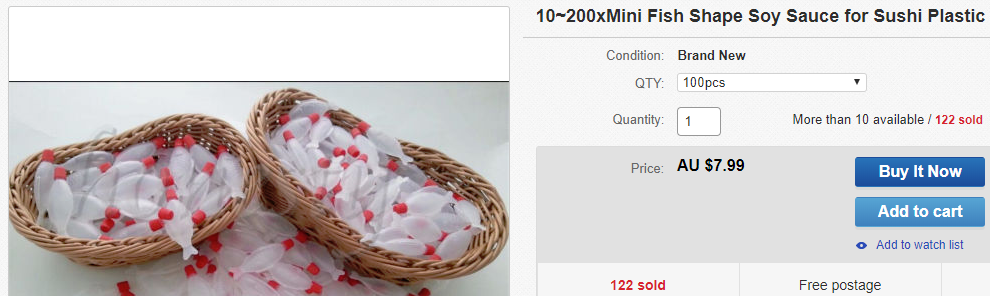
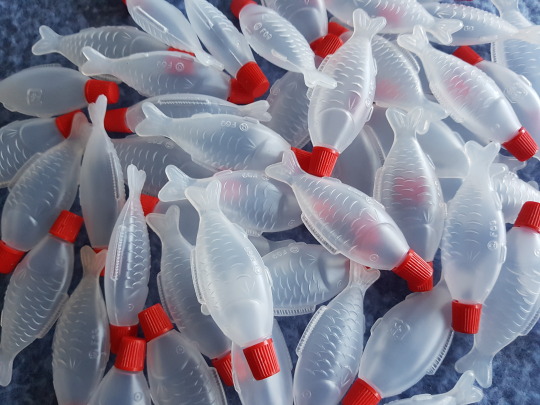
My brain, at 6 AM on a Monday: I wonder if you can order those little soy sauce fish shaped bottles in bulk, except without soy sauce in them. You should spend 30 minutes trying to find them instead of sleeping.
Must… resist…
Cons: Waste of money, waste of time, stupid, pointless, unnecessary, foolish.
So if you’re a dm like me, you probably want to be relatively skilled in some typical fantasy accents for your game to make things feel that much more real. So i’ve decided to throw together a little master post of “how to” videos on some various accents. This is mostly for my own reference, but if you’d like to save this for yourself too, go right ahead. Feel free to add on to this, as well!
Adversarial play in tabletop RPGs can be a lot of fun, but the conventional Killer GM approach really only works if a. you’re using a system that’s specifically designed for it (and most aren’t – even most editions of Dungeons & Dragons don’t have oppositional play in mind, reputation notwithstanding); and b. you’re prepared to do a lot of advance prep-work in order to give yourself the breathing room to step into the role of an opposing player. Without both of those factors in play, deliberately gunning for a total party kill will typically just lead to lacklustre stories and a lot of hurt feelings.
That doesn’t mean you can’t do the Evil Bastard GM thing as a casual GM, though. You just have to recalibarate your expectations a little. One could write a whole book on the topic – in fact, whole books have been written on it! – but at the entry level, casual bastardy has three main legs, like so:
Something I want to talk about is how the stormlight archive is so aro friendly in it’s presentation of romantic love. Not only are there multiple characters that don’t appear interested in that type of relationship (which is never presented as bad!) like Jasnah and Eshonai, but the relationships that do exist are healthy, happy, and go far in dismantling amatonormative ideas.
Dalinar for instance has been married twice, and clearly loved both the women he’s been with, albeit in different ways. The message here is that there’s no one way to love someone, that it’s deeply personal, and that the idea of a soulmate is frankly chullshit. Evi wasn’t Dalinar’s ‘one true love’ and neither is Navani. They’re both people who have been important to him at different times in his life.
Adolin’s relationship with Shallan is also very refreshing to read about. Their romance is clearly based in a strong friendship, and they value each other’s company. There’s little to none flowery language and clichéd nonsense. The two of them train together, solve problems as a team, and Adolin is shown being supportive of Shallan’s mental illness and investing time in helping her heal.
Their relationship is also shown to be a choice, rather than fate. Shallan has feelings for someone else while dating Adolin, something that is perfectly normal but is rarely ever shown in books unless the person catching feelings is about to leave their current partner. Shallan doesn’t do this, despite Adolin expressing that he’d be happy with Shallan breaking up with him were it best for her, and instead chooses to stay with the person who she has a real connection with.
In fact, other possible relationships that would have been bad for Shallan are clearly presented that way. The chasms scene with Kaladin sets the two of them up as a very clichéd melodramatic possible couple, and it’s then shown that they wouldn’t work together in Oathbringer due to Kaladin not understanding Shallan and putting her on a pedestal, something that other books may have presented as sexy and desirable rather than unhealthy and likely to cause trouble.
Shallan’s relationship with Kabsal also subverts tropes. In any other book a man who barely knows the female lead offering to give up everything he has to be with her would have been again shown as desirable. Instead, it turns out to be a red flag for him having ulterior motives, which is far more realistic.
The series also places high importance on familial and friendly love, which Renarin and Kaladin are motivated by respectively. Kaladin’s prioritisation of and desire to plan his life around his friends is never shown as childish, and Syl is proven wrong in her amatonormative insistence that Kaladin needs a romantic relationship (specifically with Shallan) to be happy. Jasnah’s familial love for Renarin saves Renarin’s life and inadvertently the many others he goes on to save. Renarin’s familial love is strong enough for him to repeatedly risk his life.
In short, the stormlight archive is revolutionary in dismantling views on romance that when accepted harm aromantics, and that it presents romantic love as something you can choose whether to have and who to give to is part of why the series has such a special place in my (aromantic) heart.
Despite the fact that I am not deaf, mute, or blind myself, one of the most common questions I receive is how to portray characters with these disabilities in fiction.
As such, I’ve compiled the resources I’ve accumulated (from real life deaf, mute, or blind people) into a handy masterlist.




 Site Title