So I did an OtGW/FMA crossover thingy. De-aged Alphonse, nonexistent birbs, homunculi obsessed with eating kids’ souls, and of course, lots of brotp feels :’>
i’ve said it once and i’ll say it again. queer people need to trust other queer people.
don’t question someone else’s labels. TRUST that they’ve done that already. if they ask you for advice, fine, but DO NOT go in swinging. don’t go up to a straight trans man and ask why he doesn’t identify as a lesbian. don’t talk to non-binary people and tell them that their identity is a sham if they don’t transition. don’t ask bi people when they’re going to pick a side. don’t assume that someone who is ace is just repulsed by their own internalized homophobia.
like just… have respect for your fellow lgbtq+ folks because there are so few of us in an OCEAN of hetero-cisnormativity. we don’t have to chip away at each other until only the Cardinal Few remain. there is no reason that we can’t have space for the people who question, the people who change their minds, the people who dip a toe in and pull back out. i am HERE for those people, just as much as i am HERE for the people who can write a dissertation on their attraction and knew from the moment they were born that they were Hella Gay.
there is nothing simple about self-discovery and frankly, i’m not here on this earth long enough to scrutinize my fellow marginalized peoples. there’s no reason to do that shit. it does not, in fact, hurt queer people to be wholly accepting of any wayward identity. non-dysphoric? demi-gray-ace as hell? don’t care, as long as you’re fighting on my side, because i’m fighting on yours.
She was born more than 200 years ago and there’s something about the
elderly in the 1800s that fascinates us. Can you see her glasses? And
that bonnet!
Victorian portraits of American Revolutionary War veterans are also fascinating!
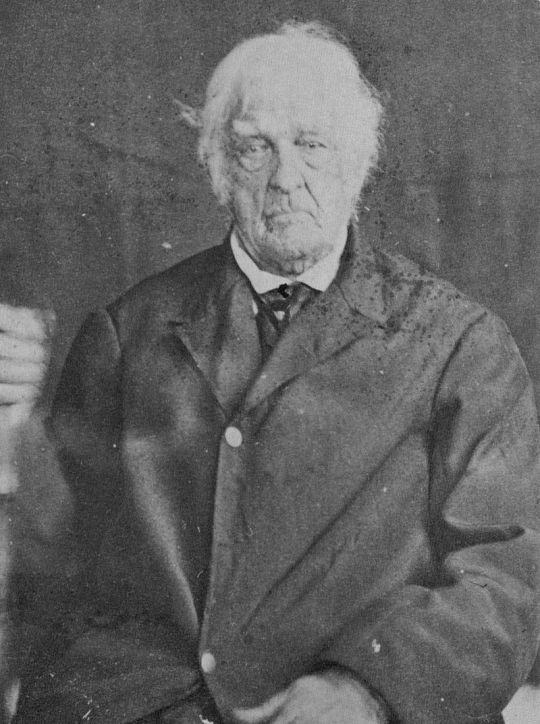
This is Lemuel Cook, photographed in the 1860s and interviewed for the 1864 book, The Last Men of the Revolution. He enlisted in the war in 1781 at age 16 and served at the Battle of Brandywine and was present when the British surrendered at Yorktown. He died at the age of 106 in 1866, having lived through both the Revolutionary War and the Civil War:
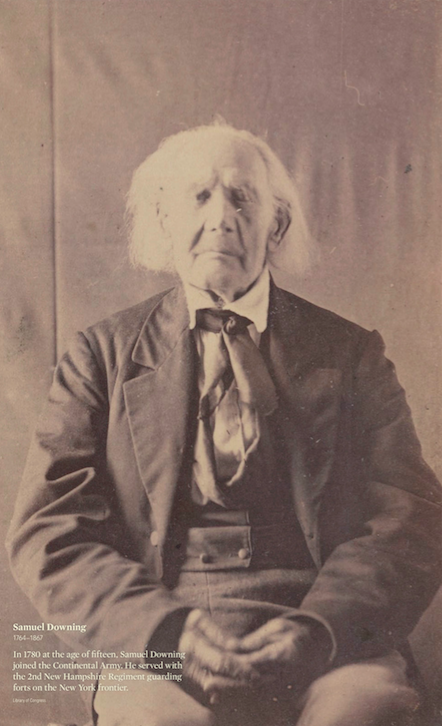
Samuel Downing was 15 when he joined the Continental Army and guarded forts in New York. He was born in 1764 and was roughly 100 years old when this photograph was taken:
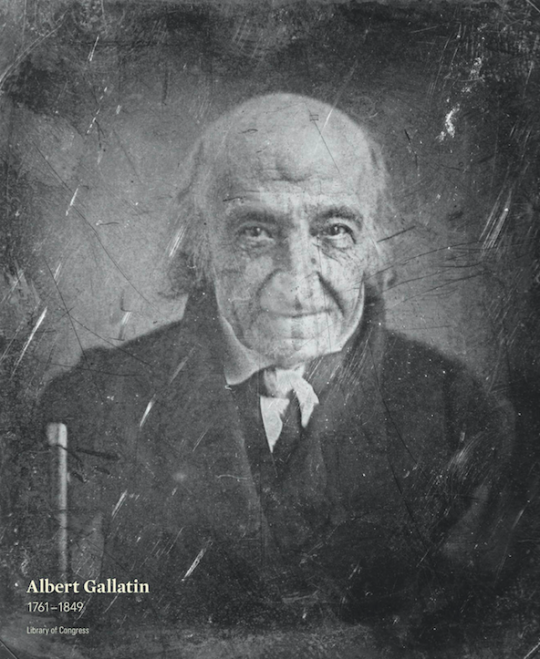
Albert Gallatin was born in Switzerland in 1761. He served as a volunteer at Fort Machias in Maine. After the war, Gallatin served three terms in the Pennsylvania House of Representatives, became the U.S. minister to France, Secretary of the Treasury, and helped found New York University. Gallatin died in 1849. This photo was taken in the 1840s, only a few years after the first known portrait of a human being was taken:
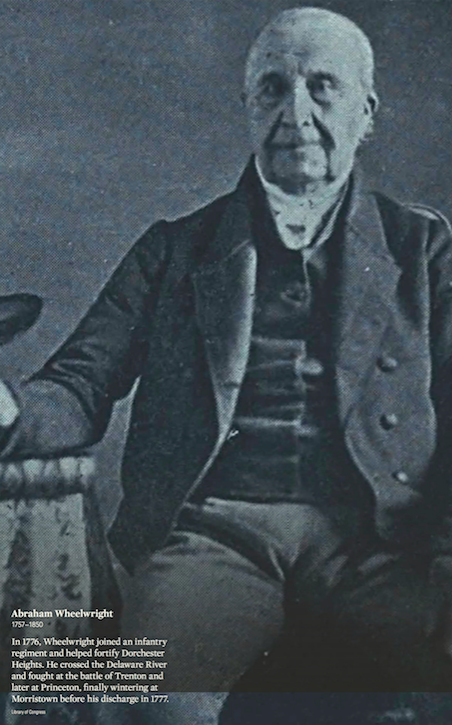
Abraham Wheelright was born in 1757–only one year after Mozart. He was 19 in 1776 when he joined an infantry regiment. Wheelright was present at the crossing of the Delaware (the event that famous painting depicts. You know. The one where George Washington looks like he’s on the cover of Vogue.) Wheelright also fought at the Battle of Princeton and the Battle of Trenton. He died in 1850, meaning the photo below, like Gallatin’s picture, was taken when photography was growing in popularity but still in its infancy:
The fact that photos exist of men who fought in the Revolutionary War– more than 240 years ago–really brings things into perspective: we can look into the faces of men who knew Washington, who went from candles to gas lamps, from hamlets to major cities, from wooden ships to steamboats. History is right there–it isn’t a cold marble bust on the mantle. It’s living and breathing, and very, very close to us.
today I had the honor of attending the Day of Mourning at Plymouth, hosted by UAINE. but this isn’t a picture of Plymouth, or of the Day of Mourning. it’s a picture from Labrador, Canada, where Indigenous peoples are fighting against an enormous dam that’s set to destroy their land. one of the Labrador Land Protectors spoke in Plymouth today. afterwards, when I spoke to her, she told me how much trouble they’ve had bringing attention to their struggle.
the Labrador Land Protectors’ full rationale for opposing this megadam can be read on their donations page (here, also linked below). the key points they make, however, are the following:
their tribes were not consulted for informed consent, violating the UN declaration on the Rights of Indigenous Peoples
workers on the dam have faced blatant anti-indigenous racism
the project is being conducted in a way that will contaminate traditional food sources with dangerously high levels of methylmercury, a neurotoxin.
the dam is built on quick clay, making it structurally unsound to the extreme. in fact, an expert states that it “cannot be stable” given the way it’s been constructed, which makes disastrous flooding inevitable.
the costs of the project are immense, to the point that the company’s own CEO has admitted it’s a disaster (yet refuses to give up on it).
the Labrador Land Protectors are also facing enormous legal fees. the woman I spoke to told me that because of their remote location, it costs them 2,000 dollars just to fly their lawyer in for a court date. their relentless activism has forced the state to conduct an inquiry into the company, which is ongoing, but again isn’t getting much attention.
please share this information, both on and off tumblr. send it to well-off, vaguely liberal relatives. pass it on to your semi-progressive churches and ask if they’ll take a special offering. talk to your friends, your profs, your organizations. these brave people need our support.




 Site Title

