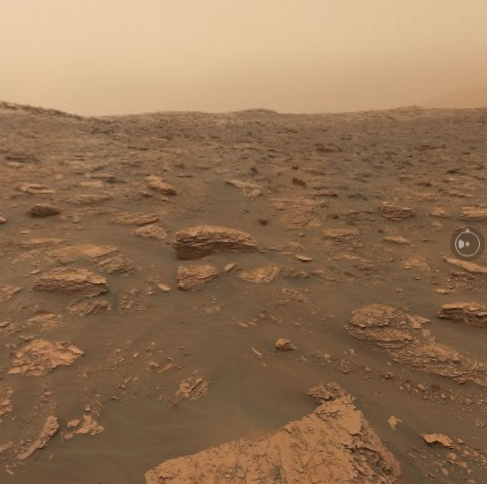
dude seeing these Mega high quality images of the surface of mars that we now have has me fucked up. Like. Mars is a place. mars is a real actual place where one could hypothetically stand. It is a physical place in the universe. ITS JUST OUT THERE LOOKING LIKE UH IDK A REGULAR OLD DESERT WITH LOTS OF ROCKS BUT ITS A WHOLE OTHER PLANET?
LIKE THIS JUST LOOKS LIKE IT COULD BE A PERSON’S BACKYARD. LIKE YEA A LITTLE DUSTY MAYBE THERE WAS A SANDSTORM BUT THAT’S COOL I’M JUST GONNA WALK DOWN TO THE STORE P S Y C H YOU’RE ON MARS BICH!
Hera: Did it hurt when you fell?
Doug: From heaven? No, Hera, I get you’re into me but-
Hera: No, I mean when you fell walking in. I watched you trip on your foot and just kind of lay there on the floor for about ten minutes.
Doug:
Renée: We all saw it.
Tumblr seems to be in potential death throes or at least, incredibly volatile and unreliable lately, but we’ve done some pretty good and informative work on canon analysis and reference guides so I was looking for ways to back it up without losing it…and the solution became obvious to me:
Archive of Our Own, aka AO3.
“What?” you might ask if you are less familiar with their TOS. “Isn’t that just a fanfic archive??”
No! It’s a fanWORK archive. It is an archive for fanworks in general! “Fanwork” is a broad term that encompasses a lot of things, but it doesn’t just include fanfic and fanart, vids etc; it also includes “fannish” essays and articles that fall under what’s often called “meta” (from the word for “beyond” or “above”, referencing that it goes beyond the original exact text)! The defining factor of whether Archive of Our Own is the appropriate place to post it is not whether or not it’s a fictional expansion of canon (fanfic), though that is definitely included – no, it’s literally just “is this a work by a ‘fan’ intended for other ‘fannish’ folks/of ‘fannish’ interest?”
The articles we’ve written as a handy reference to the period-appropriate Japanese clothing worn by Inuyasha characters? The analyses of characters? The delineations of concrete canon (the original work) vs common “fanon” (common misconceptions within the fandom)? Even the discussion of broader cultural, historical, and geographic context that applies to the series and many potential fanworks?
All of those are fannish nonfiction!
Which means they absolutely can (and will) have a home on AO3, and I encourage anybody who is wanting to back up similar works of “fannish interest” – ranging from research they’ve done for a fic, to character analyses and headcanons – to use AO3 for it, because it’s a stable, smooth-running platform that is ad-free and unlike tumblr, is run by a nonprofit (The OTW) that itself is run by and for the benefit of, fellow fans.
Of course, that begs the question of how to tag your work if you do cross-post it, eh? So on that note, here’s a quick run-down of tags we’re finding useful and applicable, which I’ve figured out through a combination of trial and error and actually asking a tag wrangler (shoutout to @wrangletangle for their invaluable help!):
First, the Very Broad:
– “ Nonfiction ”. This helps separate it from fanfic on the archive, so people who aren’t looking for anything but fanfic are less likely to have to skim past it, whereas people looking for exactly that content are more likely to find it.
– while “Meta” and “Essay” and even “Information” are all sometimes used for the kinds of nonfiction and analytical works we post, I’ve been told “ Meta Essay ” is the advisable specific tag for such works. This would apply to character analyses, reference guides to canon, and even reference guides to real-world things that are reflected in the canon (such as our articles on Japanese clothing as worn by the characters). The other three tags are usable, and I’ve been using them as well to cover my bases, but they’ll also tend to bring up content such as “essay format” fanfic or fanfic with titles with those words in them – something that does not happen with “Meta Essay”.
– I’ve also found by poking around in suggested tags, that “ Fanwork Research & Reference Guides ” is consistently used (even by casual users) for: nonfiction fannish works relating to analyses of canon materials; analyses of and meta on fandom-specific or fanwork-specific tropes; information on or guides to writing real-world stuff that applies to or is reflected in specific fandoms’ media (e.g. articles on period-appropriate culture-specific costuming and how to describe it); and expanded background materials for specific fans’ fanworks (such as how a given AU’s worldbuilding is supposed to be set up) that didn’t fit within the narrative proper and is separated out as a reference for interested readers.
Basically, if it’s an original fan-made reference for something specific to one or more fanworks, or a research aid for writing certain things applicable to fanworks or fannish interests in general, then it can fall under that latter tag.
– You should also mark it with any appropriate fandom(s) in the “Fandom” field. Just like you would for a fanfic, because of course, the work is specifically relevant to fans of X canon, right?
If it discusses sensitive topics, or particular characters, etc., you should probably tag for those. E.g. “death” or “mental illness”, “Kagome Higurashi”, etc.
Additionally, if you are backing it up from a Tumblr you may wish to add:
– “ Archived From Tumblr “ and/or “ Cross-Posted From Tumblr ” to reference the original place of publication, for works originally posted to tumblr. (I advise this if only because someday, there might not be “tumblr” as we know it, and someone might be specifically looking for content that was originally on it, you never know)
– “ Archived From [blog name] Blog ”; this marks it as an archived work from a specific blog. And yes, I recommend adding the word “blog” in there for clarity- Wrangletangle was actually delighted that I bothered to tag our first archived work with “Archived From Inu-Fiction Blog” because being EXTREMLY specific about things like that is super helpful to the tag wranglers on AO3, who have to decide how to categorize/”syn” (synonym) various new tags from alphabetized lists without context of the original posting right in front of them. In other words, including the name AND the word “blog” in it, helps them categorize the tag on the back end without having to spend extra time googling what the heck “[Insert Name Here]” was originally.
Overall, you should be as specific and clear as possible, but those tags/tag formats should prove useful in tagging it correctly should you choose to put fannish essays and articles up on AO3 🙂
Oh, and protip sidebar for those posting, especially works that are more than plain text: you can make archiving things quicker and easier for yourself, but remember to plan ahead for tumblr’s potential demise/disabling/service interruptions.
The good news: You can literally copy and paste the ENTIRE text of a tumblr post from say, an “edit” window, on tumblr, straight into AO3′s Rich Text Format editor, and it will preserve pretty much all or almost all of the formatting – such as bold, italics, embedded links, etc!
But the bad news: keep in mind that while AO3 allows for embedded images and it WILL transfer those embedded images with a quick copy-paste like that, AO3 itself doesn’t host the images for embedding; those are still external images. This means that whether or not they continue to load/display for users, depends entirely on whether the file is still on the original external server! As I quickly discovered, in the case of posts copied from the Edit window of a tumblr post, the images will still point to the copies of the images ON tumblr’s servers.
What this means is that you should back up (save copies elsewhere of) any embedded images that you consider vital to such posts, in case you need to upload them elsewhere and fiddle with where the external image is being pulled from, later.
Personally, I’m doing that AND adding image descriptions underneath them, just to be on the safe side (and in fairness, this makes it more accessible to people who cannot view the images anyway, such as sight-impaired people who use screen readers or people who have images set to not automatically display on their browser, so it’s win-win)
Thanks for this helpful guide! I haven’t used some of these tags so far for the fandom stats work I’ve cross-posted to AO3, but that’s because I didn’t know about them. Great ideas! 🙂
I keep meaning to mass archive my Toastystats work to AO3, but I am always stymied by image hosting when trying to overcome inertia and do so. It takes time to repost all the images to external hosting (like imgur). So thus far I’ve only done it for a few major analyses, and even in some of those cases, the images are hosted on Tumblr. But I should finally get around to it. At least I’ve exported my Toastystats side blog recently, so most of my stuff should be preserved if anything should happen. But maybe this holiday break I’ll finally make more progress.
I second all of this!
I’ve also found that AO3 is the best way for me to distribute my vids. I do have to host them elsewhere, but AO3 gives me a consistent URL and a way to have useful headers with fandom/ship/etc. even if I switch hosting a hundred times.
“The medieval warrior, realizing the consequences of his impulsive act, immediately approached the owner of the drone and offered to pay for the damage.
The owner of the drone was so impressed by the brilliant attack that he suggested organizing a competition for bringing down “dragons” with short spears next year.
Drone owners have another year to develop a unique “dragon-like” design for their flying machines.” (x)
I am 100% cooler with this knowing that the spear-thrower realized “oops maybe I shouldn’t have done that” and tried to make it right, and that the guy who the drone belonged to was cool with it
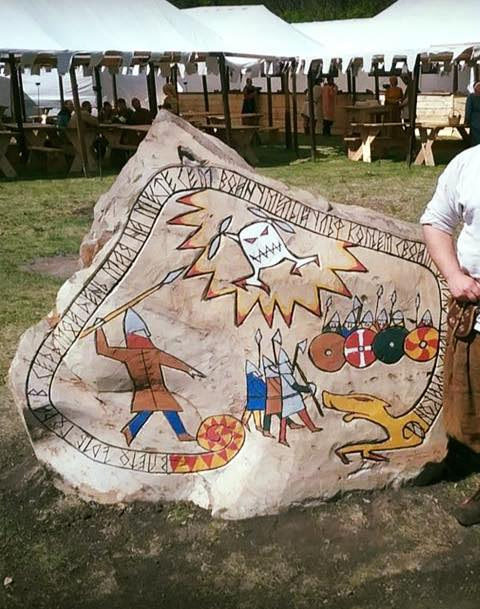
just so everyone knows, this has already been memorialized in a runestone
Everything about this post blesses those involved with a +4 on their next Today is Good Day roll
I’m rereading Anne of Green Gables and its sequels, and I just have to say that Anne of Avonlea is a weird book. I was expecting to find it partly delightful (because it was one of my favorite in the series as a kid) and partly disappointing (because the general consensus is that it’s a weak point in the series). I was right on both counts, but I didn’t anticipate going “haha what the fuck” so many times.
The basic outline of the story isn’t particularly unusual. Anne, now sixteen, teaches at the Avonlea one-room schoolhouse. In her spare time, she hangs out with her friends, studies in hopes of attending college someday, and serves as secretary for the Avonlea Village Improvement Society, which is part unofficial HOA and part social club. She also gets Cousin Oliver-ed when Marilla takes in orphaned six-year-old twins Davy and Dora, and she helps a few people reconcile with long-lost sweethearts. It’s all very cozy and lightly humorous, except:
There’s maybe something seriously wrong with Davy–like, Macaulay Culkin in The Good Son bad. At one point, he locks Dora in neighbor’s shed, returns to Green Gables, and pretends to have no idea where she is as Marilla and Anne grow more and more frantic. They finally face the possibility that Dora fell in the well (which would most likely mean her death) and call over a neighbor to drag the well. Davy watches these proceedings with glee. When she finds out, Anne is deeply disappointed that he told a “falsehood,” but doesn’t seem concerned that he enjoyed seeing her and Marilla (neither of whom he dislikes) become convinced that his sister had died horribly. He constantly plays rough with Dora against her wishes and takes great pleasure in smashing bugs with rocks. Granted, six is very young, he just lost his mother, and probably some of this is developmentally normal, but jeez.
One of Anne’s students, eleven-year-old Paul Irving, has a rich fantasy life that includes four imaginary friends who “live” on the shore near his grandmother’s house. Nothing wrong with that, but he seems legitimately worried that one of his imaginary friends (Nora) will find out that he’s been visiting another imaginary friend (the Golden Lady) without her knowledge, despite clarifying to Anne that he knows none of these friends are real. Which makes it seem less like he’s a boy with a good imagination and more like (a) he’s desperately trying to work through his mother’s death and feelings of being different by himself because mental health resources have barely been invented or (b) his imaginary friends are real and possibly very bad news.
Anne becomes fixated on a woman who died of tuberculosis thirty years before, which is sweet in execution and probably a way of dealing with the recent death of Matthew and the long-ago death of her parents, but I got kind of worried about her after a point.
Anne and her friends go on a picnic, where their appreciation of nature grows so intense that it becomes weird, like the Great God Pan is going to show up.
Don’t get me wrong, I’m into the undercurrent of grief and borderline-creepy nature. I just wasn’t expecting it.
Have you ever read The Wind in The Willows? Because there’s a scene in it where the Great God Pan, or something like it, does show up and it reads like one of those eerie encounters with fairies in Irish Mythology where a mortal goes underhill and comes back changed forever. Just this sudden pagan animism in a cute story about personified animals who drink tea and row boats.
Also I am always blown away by Anne being a full-fledged schoolteacher at 16. When my sister was sixteen she was working at McDonalds and someone told her to go clean puke out of the ballpit and she handed her hat over and said “see ya” and walked out on the spot. When I was sixteen I refused to learn first aid because someone might actually ask me to babysit their kids if I had a certificate. I can’t imagine teaching at that age.




 Site Title